Sahibganj: Even 78 years after the nation’s independence, some hill villages in the Sahibganj district of Jharkhand continue to struggle for basic amenities. The lack of roads forces villagers to face daily hardships. The situation becomes most critical when someone falls ill; without a proper road, ambulances cannot reach the villages, and transporting a patient to a hospital—even by motorcycle—is extremely difficult. In such cases, villagers are forced to use a *khatia* (traditional cot) as a makeshift ambulance to carry patients to the main road. Pregnant women, too, must be carried to the hospital on the shoulders of others.
Residents of Four Hill Villages Have Waited Years for a Road
In the Taljhari block of Sahibganj district, residents of Shivgadi, Gamharia, Dewana Pahar, and Pupam Pahar—all located within the Salgachhi Santhali Panchayat—have long been demanding a paved road. Reaching these villages is a major challenge due to the hilly and rocky terrain.
While villagers manage to navigate the paths during the dry season, conditions deteriorate significantly once the rains begin. The trails become muddy and slippery, making even walking a difficult task. Consequently, if someone’s health worsens, family members must rely on the help of other villagers to carry the patient on a khatia to the main road.
Impact on Children’s Education and Healthcare
The absence of roads affects more than just healthcare. Children in these villages also face significant obstacles in their education; students traveling to schools and colleges in Barhet must navigate narrow, hilly paths every day—a struggle that intensifies during the monsoon season.
Furthermore, villagers are forced to travel long distances just to reach local markets or to procure essential supplies and rations. They have to struggle significantly even for minor, everyday needs.
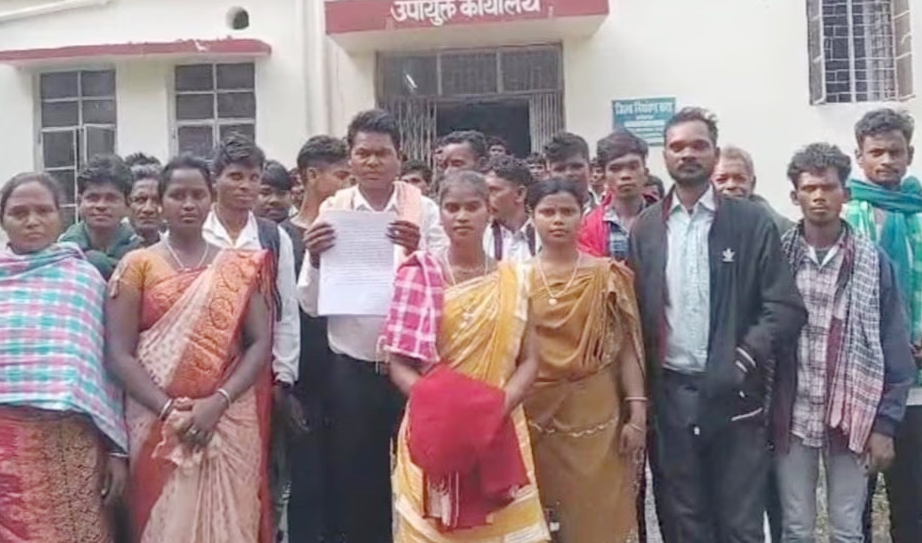
Demand for road construction submitted to the Deputy Commissioner
Recognizing the challenges faced by the villagers, Panchayat Samiti member Chapa Pahadiya has urged the district administration to initiate the construction of a road. In a formal submission to the Deputy Commissioner, he has requested the development of a paved road—stretching from the main road near Shivgadi Temple, passing through Gamharia, and extending to Devana Pahar and Pupam Pahar.

He has proposed that the road be constructed under the Pradhan Mantri Gram Sadak Yojana (Prime Minister’s Rural Road Scheme) through the Rural Development Department. According to Chapa Pahadiya, the construction of this road would bring relief to thousands of residents in these villages—most notably benefiting patients, pregnant women, the elderly, and schoolchildren.
Villagers seek action, not just assurances
The villagers state that they have been demanding a road for years, yet the issue remains unresolved. A proper road would not only simplify travel but also improve access to employment opportunities, markets, and government welfare schemes.
The pressing question now is: how much longer will patients in these hilly villages have to be carried to the hospital on cots? How much longer will pregnant women have to be transported on shoulders across difficult, rugged terrain? The villagers are not asking for extravagant amenities; they are simply requesting a basic necessity—a road. It remains to be seen when the district administration will take concrete action in this regard.