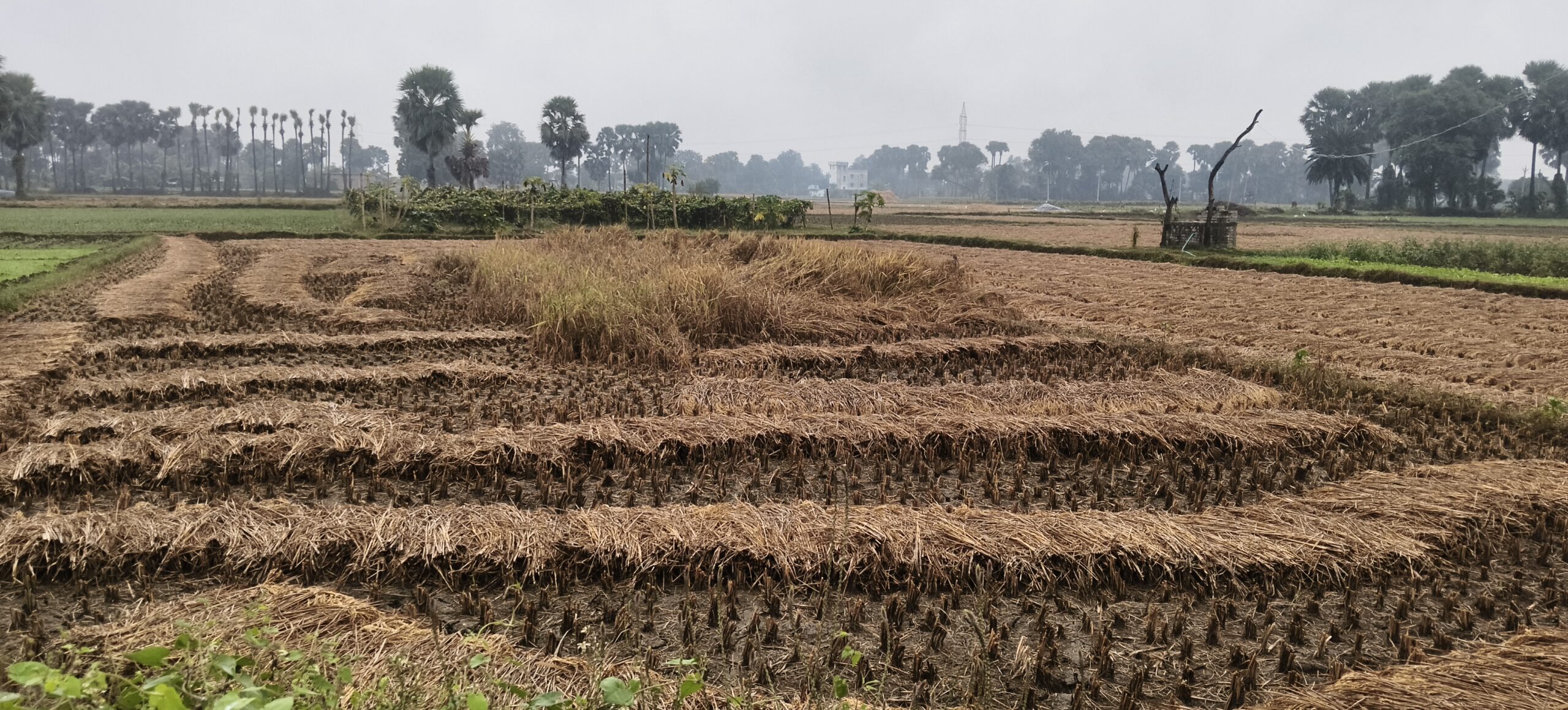
Bhagalpur: Unseasonal rain, which began on Saturday morning—coinciding with the peak season for Rabi sowing and paddy harvesting—has heightened concerns among farmers. In most parts of the district, the paddy crop has already been harvested and is either left in the fields to dry or stored in threshing grounds.
Meanwhile, in some low-lying areas or regions where planting occurred later, the paddy crop is still standing in the fields. With light, intermittent rain falling since the morning, there is a looming threat that this ready-to-harvest or harvested crop, left out in the open, could be ruined.
Farmers across various blocks in the district—including Kahalgaon, Pirpainti, Sabour, Nathnagar, Shahkund, Sultanganj, and Naugachia—are deeply distressed by this sudden change in weather.
Farmers state that after putting in hard work and investing in costly irrigation and fertilizers, they had achieved a good paddy yield; however, the rain—arriving just before the threshing process—has dashed all their hopes. In fields where the harvested crop was left behind, water accumulation has soaked the bundles of paddy. Furthermore, there was insufficient time to cover the paddy stored in threshing grounds with tarpaulins or plastic sheets, raising concerns about increased moisture levels.
According to agricultural experts and local farmers, rain at this stage can damage the crop in several ways. If the harvested crop remains exposed to water or excessive moisture for two to three days, the grains may begin to sprout while still in the panicles. Once soaked, the paddy grains may also turn black. This will not only degrade the quality of the rice but also create significant difficulties in securing a fair price in the market or at government procurement centers. The accumulation of heat within piles of wet paddy stored at the threshing floor increases the risk of fungal growth and the rotting of straw. This could also lead to a shortage of animal fodder. Rain accompanied by strong winds may cause standing mature crops in the fields to flatten, which would double harvesting costs and reduce yield due to grain shedding. Experts from Bihar Agricultural University (Sabour) and the Krishi Vigyan Kendra (Agriculture Science Centre) have described these weather conditions as unfavorable for the harvesting and threshing of paddy.

Experts note that the current moisture levels directly affect the quality of the paddy. They have advised farmers to take immediate, necessary steps to minimize losses. Paddy sheaves stored at the threshing floor should be promptly and thoroughly covered with thick polythene sheets or tarpaulins. To prevent rainwater from seeping in from below, the sheaves should be placed on elevated ground or atop a thick layer of straw. In fields where harvested crops are lying or where paddy is still standing, drainage channels should be created immediately—by cutting through the field embankments—to remove excess water. Harvesting of any remaining standing crops should be postponed until the weather clears completely and the sun comes out. As soon as the rain stops and the sun emerges, the wet sheaves should be opened and spread out; this allows air and sunlight to remove moisture, preventing the grains from germinating or turning black. After threshing, the paddy should not be packed into sacks until the moisture content in the grains reaches approximately 12 to 14 percent.
Meanwhile, farmers’ organizations in the district have urged the administration and the Agriculture Department to conduct a prompt assessment of crop damage in the affected blocks once the rain ceases. Furthermore, farmers whose crops have suffered damage should be provided with appropriate compensation; additionally, the moisture content standards for paddy procurement through PACS (Primary Agricultural Credit Societies) should be slightly relaxed, so that farmers are not forced to sell their paddy to middlemen at throwaway prices.