Bhagalpur: The Ganga, revered as a sacred and life-giving river, is currently grappling with a severe ecological crisis in the district, driven by escalating pollution and human interference. While the ‘Vikramshila Gangetic Dolphin Sanctuary’—the country’s only such sanctuary, stretching from Sultanganj to Kahalgaon—has seen an increase in the dolphin population due to conservation efforts, the deteriorating quality of the river water has once again cast doubt on the survival of its aquatic life.
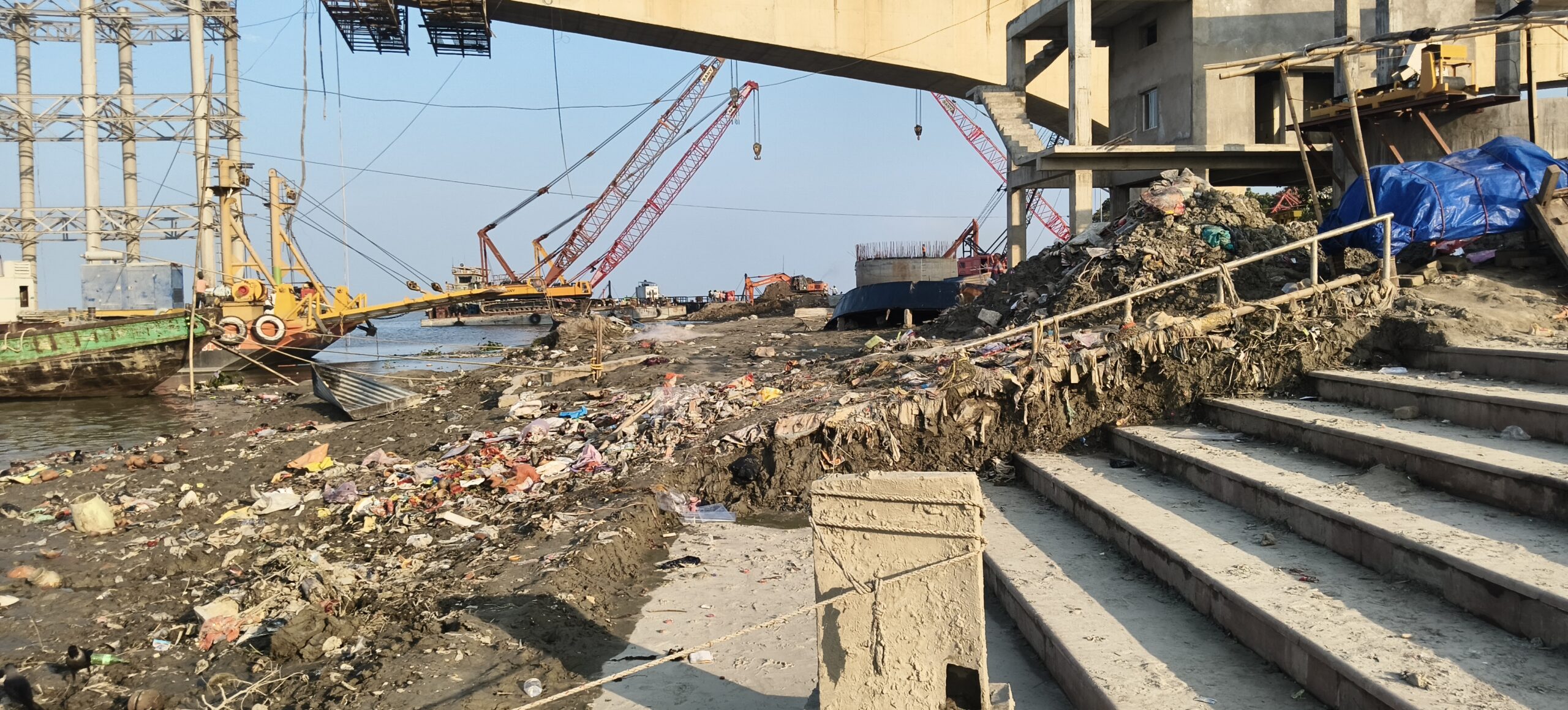
Despite the ‘Namami Gange’ project and various awareness campaigns, the waters of the Ganga near the district’s urban riverfronts (ghats) and industrial zones are becoming increasingly polluted. The river’s Biochemical Oxygen Demand (BOD) is rising, while dissolved oxygen levels are falling. As water levels recede following the monsoon, the accumulation of silt and filth along the riverbanks creates an even more alarming situation.
Notably, untreated wastewater from dozens of large and small urban drains is being discharged directly into the Ganga. Furthermore, the riverfronts are littered with plastic, religious offerings, and solid waste. Chemical fertilizers and pesticides, washed off from agricultural lands along the banks, are rendering the water toxic. Illegal sand mining along the riverbanks is disrupting the river’s natural depth and structural integrity. Additionally, the growing movement of motorized boats and large cargo vessels is causing oil spills and significant underwater noise pollution.
It is worth noting that approximately 200 to 215 Gangetic dolphins inhabit the stretch between Sultanganj and Kahalgaon-Manihari—a population that serves as the primary indicator of the river’s overall health. Pollution and human interference are having a direct impact on these creatures. Ganges river dolphins are blind from birth and rely on sound waves to hunt and navigate. This natural ability is being disrupted by the noise from ships and machinery used in sand mining.
Pollution has led to a sharp decline in both the variety and population of native fish species, creating a food crisis for the dolphins. Furthermore, heavy metals and chemicals that accumulate in the bodies of fish enter the food chain, eventually reaching dolphins and turtles and impairing their reproductive capacity. It is not just the dolphins that are affected; the breeding grounds of rare softshell turtles, gharials, and native fish species—such as Hilsa and Rohu—are also being destroyed by silt and pollution. Environmentalists and aquatic biologists argue that merely focusing on population growth is insufficient; the primary challenge lies in safeguarding their habitat. They note that the Ganges river dolphin sits at the apex of the ecosystem; the dolphins can only remain secure if the river water remains clean and free-flowing.

The discharge of urban sewage directly into the river, the accumulation of plastic waste, and the use of fine-mesh fishing nets pose the greatest threats to their survival. If the capacity of existing sewage treatment plants is not fully utilized in a timely manner, the aquatic biodiversity will suffer irreparable damage. Experts and environmentalists have urged the administration to strictly prohibit illegal mining and the use of banned fishing nets within sanctuary areas, ensure that all sewage treatment plants operate at full capacity, and involve local fishermen and citizens in efforts to keep the river clean.