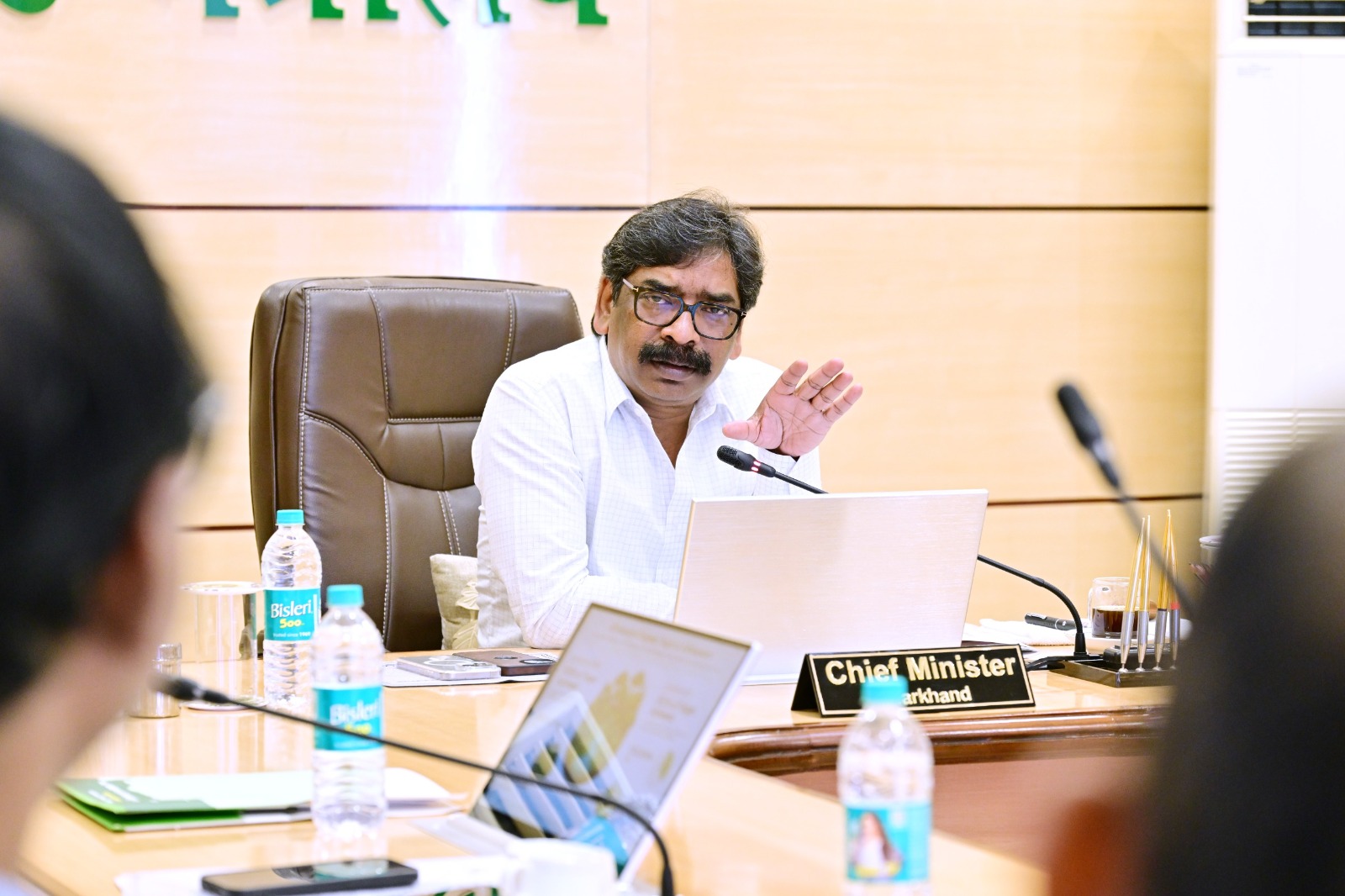
Jharkhand News : Jharkhand Chief Minister Hemant Soren on Monday directed officials to prepare a concrete action plan to reduce human-wildlife conflict and carry out precise mapping of all elephant corridors across the state.
The directions were issued during the first meeting of the Governing Body of the Jharkhand Compensatory Afforestation Fund Management and Planning Authority (CAMPA)–State Authority, chaired by the Chief Minister.
The meeting reviewed schemes related to compensatory afforestation, forest conservation, elephant corridors, environmental protection and the development of forest areas in Jharkhand.
CM Calls for Protection of Traditional Elephant Routes
Soren directed officials to ensure that all elephant corridors are precisely mapped and that traditional wildlife movement routes remain free from obstruction.
He also called for detailed identification and necessary demarcation of sensitive areas within elephant corridors so that wildlife habitats and movement zones are not unnecessarily disturbed.
The Chief Minister stressed the need for better coordination among different departments to ensure the timely implementation of projects.
He said development activities, including crusher operations in hilly regions and coal mining in forest areas, could affect wildlife habitats and traditional movement routes.
Soren directed officials to prepare an action plan that maintains a balance between development activities and wildlife conservation.
Elevated Roads Suggested in Sensitive Wildlife Corridors
The Chief Minister said that where roads are necessary through elephant corridors, technologies such as elevated roads should be explored to prevent obstruction to the movement of elephants and other wildlife.
He also called for planting tree and plant species that provide food for wildlife within their natural habitats. According to the Chief Minister, such measures could help reduce incidents of human-wildlife conflict.
Soren further directed officials to give special priority to soil and water conservation, groundwater recharge and environmental restoration.
Medicinal Plants to Be Included in Afforestation Drives
The Chief Minister instructed the Forest Department to include medicinal trees and plants in afforestation programmes.
He said the department should select plant species that are beneficial to both local communities and wildlife.

Soren stressed that the benefits of CAMPA-funded schemes should not remain limited to paperwork and must create a visible impact on forests as well as the lives of people living in rural areas.
He also directed officials to regularly monitor plantation sites to ensure that saplings survive and eventually grow into mature trees.
Thermal Cameras and Real-Time Elephant Alerts Planned
Forest Department officials informed the meeting that modern technology is being used to monitor elephant movement and reduce the risk of human-wildlife conflict.
Thermal and infrared cameras are being installed in sensitive areas, including Ramgarh and Chakulia, to detect elephant movement in advance.
According to officials, tower-mounted cameras will detect the movement of elephants and local residents will be alerted through hooters.
Mobile numbers of people living in vulnerable areas are also being registered so they can receive real-time information about elephant movement.
The information will also be shared online with concerned departmental offices, allowing officials to take timely action.
CAMPA Projects Reviewed for Timely Implementation
Soren also reviewed ongoing and proposed CAMPA schemes, including fund availability, expenditure, quality of work and progress at the ground level.
He directed officials to ensure transparency, timely implementation and regular monitoring of projects. He also called for accountability to be fixed wherever projects face unnecessary delays.
The Chief Minister said Jharkhand’s forests and natural resources are an invaluable legacy for future generations. He stressed the importance of maintaining a balance between development and environmental conservation.
The meeting was attended by Chief Secretary Avinash Kumar, senior officials from the Forest, Environment and Climate Change, Road Construction, Finance, Rural Development, Tourism, Revenue and Welfare departments, along with senior Forest Department and wildlife officials.