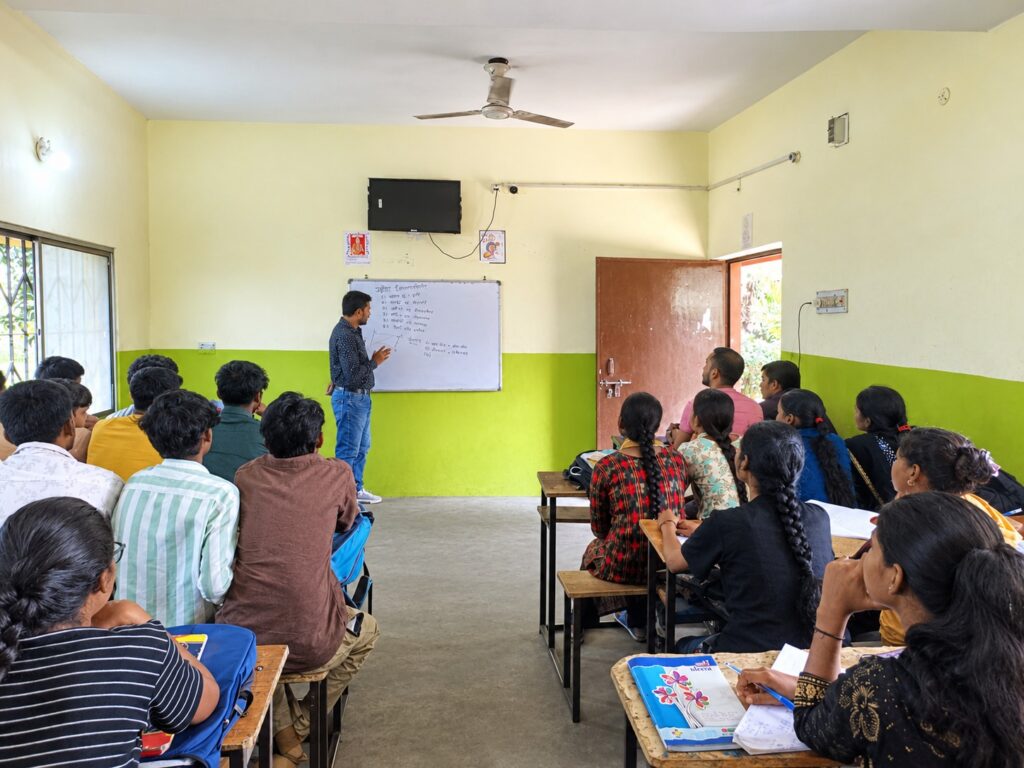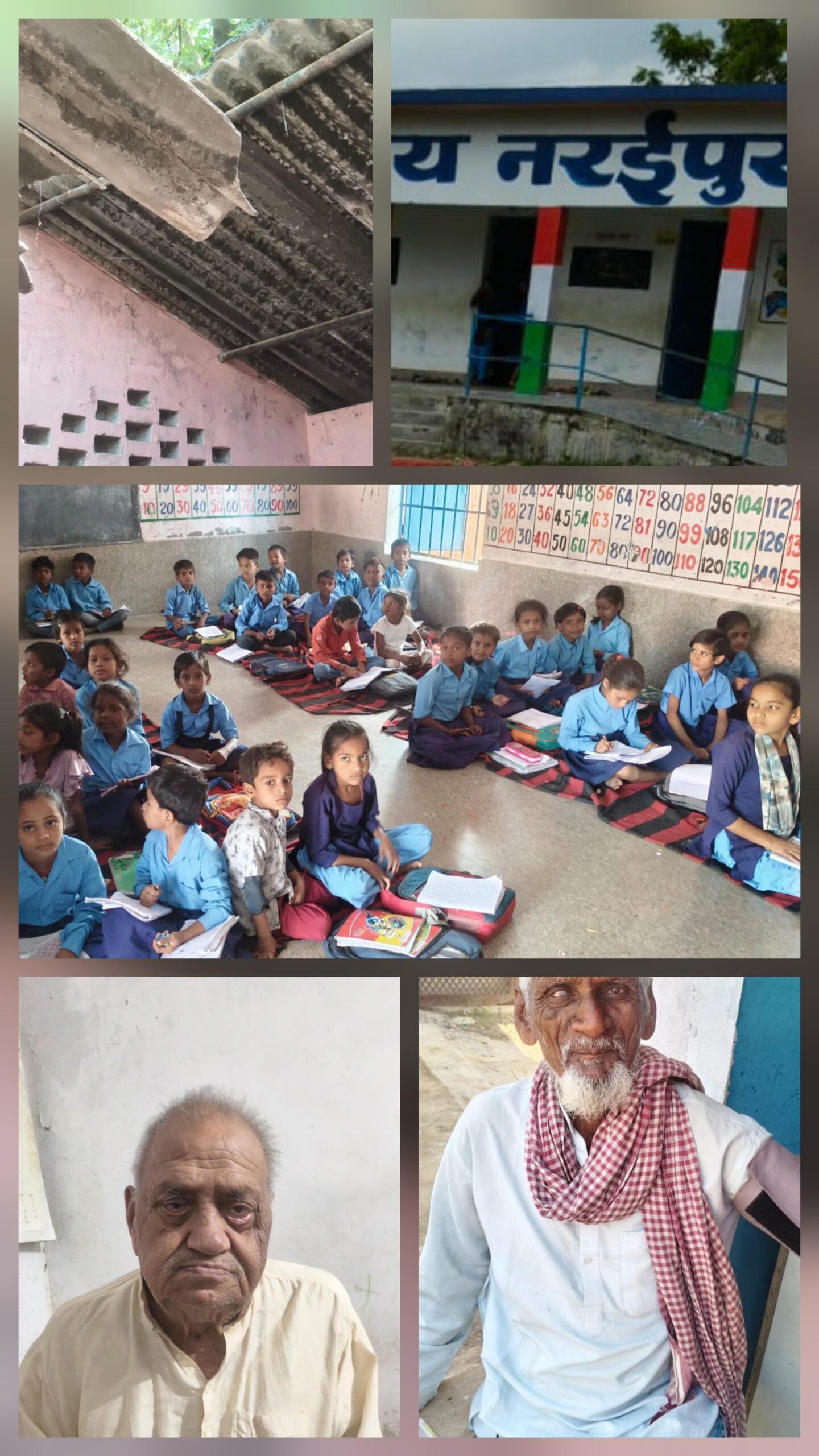
West Champaran (Bagaha): While the Right to Education Act emphasizes providing quality education and essential facilities to children aged 6 to 14, a historic school in Naraipur, Bagaha, remains a place where children are forced to study despite a lack of basic amenities.
The school lacks even the most fundamental furniture, such as benches and desks. Essential facilities like drinking water, toilets, and a kitchen shed are also unavailable. Regardless of the weather—be it scorching heat, rain, or cold—children are compelled to sit on the floor to study.
Ironically, this is not a new institution; it was established in 1922. Over its 104-year history, the school has educated many individuals who went on to make their mark in fields such as politics, social service, education, and administration. Despite this, the current state of the school raises serious questions about the education system and the functioning of the relevant authorities.
‘Budhwa Guruji’ Remembered for His Discipline
92-year-old Jagdamba Mishra and 85-year-old Jalil Miyan, both former students, recalled that after independence, when the school was brought under government administration, Ramdhari Singh was the first government-appointed teacher. To this day, the elders of the region remember him with respect as ‘Budhwa Guruji’ (the ‘old’ teacher). His dedication to education and his strict approach to discipline remain vivid in the memories of his former students.
The recollections of these elderly men speak to the school’s glorious past. Once a premier center for education in the region, the institution now leaves its students waiting even for the most basic academic facilities.
Many Prominent Figures Were Educated at This School
The history of this school extends far beyond its mere establishment. Notable individuals who studied here include the late Purnamasi Ram (a former cabinet minister in the Bihar government), former chairman Ranjeet Rao, former Legislative Council member Rajesh Ram, the late social worker Akhileshwar Mishra, and Dr. Ravikesh Mishra, a former principal of the degree college. Furthermore, dozens of others who received their education here went on to become teachers, or officials and employees within the Bihar government. Many have since retired, while others continue to serve in various professional roles.
Ramesh Mishra, a former student of the school and a retired teacher, shared that his own father had also studied at this institution. His father had even contributed to some construction work at the school—a detail that highlights the long-standing connection the local community has with the school, as well as their sense of social responsibility toward it.
Authorities and Representatives Informed, Yet No Results

According to Ramesh Mishra, the Education Department and local public representatives have been informed about the school’s dilapidated state and the lack of basic amenities. Despite this, no concrete action has been taken. He expressed concern that while there is much talk about the “Right to Education” and the holistic development of children, students at this historic school remain deprived of essential facilities such as benches, desks, drinking water, and toilets.
He warned that if basic amenities—including benches and desks—are not provided before the onset of winter, a public movement will be launched.
Why the Neglect of a School for Underprivileged Children?
Ramesh Mishra alleges that, despite its location in the heart of the city, the school is neglected primarily due to the socio-economic background of its students. He notes that most families from the upper and middle classes send their children to private schools, whereas this government school primarily serves children from low-income and laboring families.
This raises a critical question: should the quality of facilities in government schools be determined by the economic status of the children who attend them? The “Right to Education” is intended to ensure equal opportunities for every child. Children from underprivileged families attending government schools deserve a dignified environment, a safe campus, and essential educational facilities.
Now, the focus shifts to the accountability of the administration
Established in 1922, this school in Naraipur stands at a crossroads between its glorious past and its current, dilapidated state. Many who received their education here have gone on to contribute significantly to society and the administration; yet today, students at this very institution are forced to sit on the floor to study.
It is now imperative for the Education Department, local administration, and elected representatives to conduct an on-site inspection of the school and ensure the provision of essential facilities—such as benches and desks, clean drinking water, toilets, and a kitchen shed. The school’s illustrious history will only truly hold meaning if the children currently studying there are provided with a dignified educational environment, enabling them to build a better future.