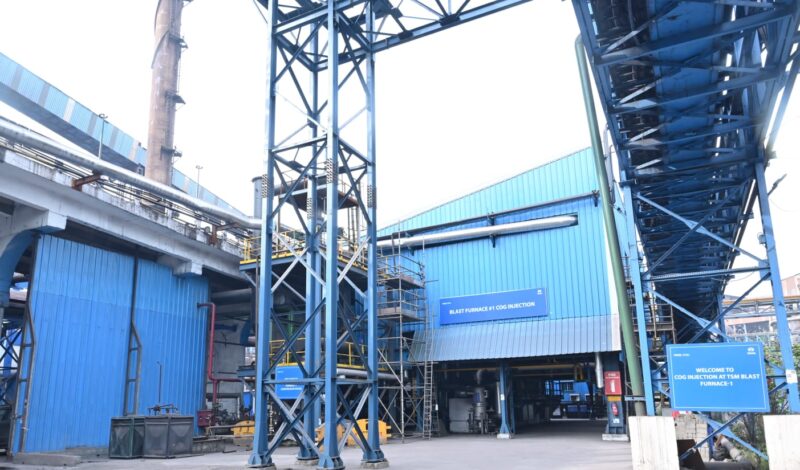
India News : Tata Steel Meramandali has commissioned a Coke Oven Gas (COG) Injection Project at Blast Furnace 1, marking a first-of-its-kind initiative in the Indian steel industry.
According to the company, the project is expected to reduce fossil fuel consumption and CO2 emissions while supporting Tata Steel’s target of achieving Net Zero by 2045. The initiative also focuses on advancing low-carbon technologies for iron and steel production.
Focus on Better Use of Process Gases
Subodh Pandey, Vice President – Technology, R&D, NMB and Graphene, Tata Steel, said that maximising the use of process gases would help reduce dependence on external fossil fuels.
“This initiative of maximising the utilisation of process gases to reduce dependence on external fossil fuels reinforces Tata Steel’s leadership in sustainable manufacturing. We remain focused on demonstrating and scaling low carbon technologies, thereby accelerating our journey towards Net Zero by 2045,” he said.
Sudhir Kumar Mehta, Vice President – Operations, Tata Steel Meramandali, said the project reflects the company’s efforts to improve operational efficiency while reducing environmental impact.
“This project is a good example of how our teams continuously look for ways to improve efficiency while reducing the environmental impact. By finding a productive use for coke oven gas within the blast furnace process, we are making our operations leaner and cleaner,” Mehta said.
Coke Oven Gas to Be Used in Blast Furnace
Coke Oven Gas is a hydrogen and hydrocarbon-rich byproduct gas generated in an integrated steel plant. It is typically used for power generation, heating or flared.
With support from technology partner M/s Paul Wurth-SMS and equipment supplier M/s Kobelco, Tata Steel has implemented COG injection into the blast furnace through tuyeres.

The gas is used as a substitute for fossil fuel as a reductant, which is expected to reduce the environmental impact of the steelmaking process.
Three-Fuel System to Improve Flexibility
Apart from reducing fossil fuel consumption and CO2 emissions, the project provides an opportunity to operate the blast furnace using a three-fuel system.
The company said this is expected to improve operational flexibility and efficiency. The initiative also supports Tata Steel’s efforts in green steel production through the safe and stable operation of advanced injection technologies.
Tata Steel’s Low-Carbon Technology Initiatives
Tata Steel has previously demonstrated several low-carbon blast furnace technologies. These include the injection of coal bed methane, hydrogen and biochar into blast furnaces.
The commissioning of the COG Injection Project at Tata Steel Meramandali adds another technology initiative to the company’s efforts to reduce fossil fuel dependence and advance low-carbon steel production.