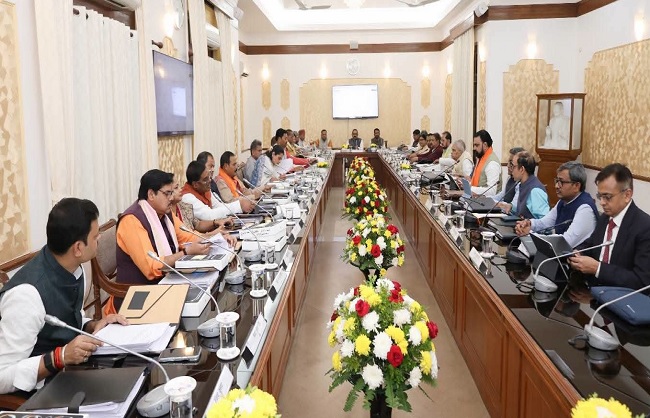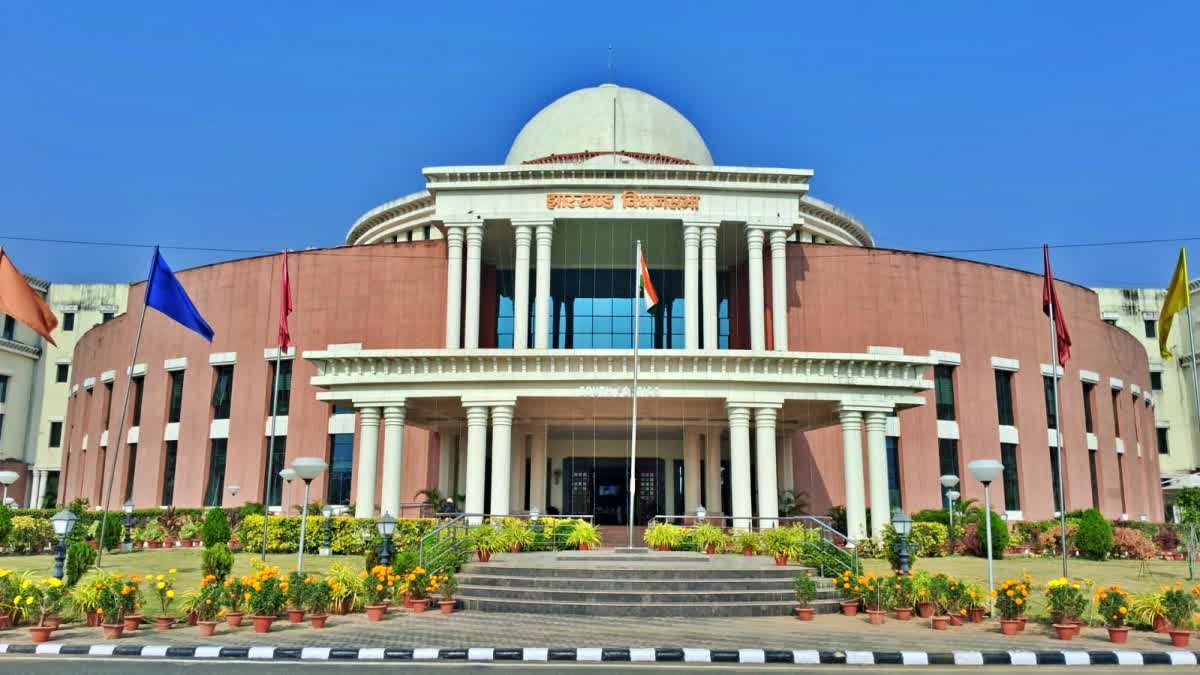
Ranchi: On Wednesday, the first day of the special session of the Jharkhand Legislative Assembly, the state government moved a resolution opposing the Special Intensive Revision (SIR) process. While presenting the resolution in the House, Parliamentary Affairs Minister Radhakrishna Kishore demanded the removal of Chief Election Commissioner Gyanesh Kumar from his post.
The proceedings of the special session—convened to discuss the SIR process and the Mines and Minerals (Development and Regulation) Amendment Bill (MMDR)—were initiated by Assembly Speaker Rabindra Nath Mahto. Following this, the Parliamentary Affairs Minister placed the state government’s resolution before the House.
The resolution expresses concern over the current SIR process and calls for the formulation of a transparent procedure developed through extensive consultations with all states and political parties. The Minister stated that people are facing difficulties in getting their names added to the electoral roll. Furthermore, there are numerous discrepancies regarding age and other details within the list.
According to the government’s resolution, out of a total of 26.4 million (2.64 crore) voters in Jharkhand, 22.1 million (2.21 crore) names have been published in the draft electoral roll. Notices have been issued to approximately 27 percent of the voters included in this draft list, flagging them as “suspicious.” The government claims that more than 38 percent of the total electorate has either had their names removed or has been served a notice.
The resolution notes that over 75 percent of the cases involving issued notices stem from issues such as spelling variations in parents’ names, age-related discrepancies, and other logical errors. Highlighting the socio-cultural landscape of Jharkhand, the government emphasized that special caution must be exercised when implementing the SIR process in a state with a large tribal population.
A significant challenge, particularly for members of Particularly Vulnerable Tribal Groups (PVTGs), is the lack of necessary documentation and a general absence of awareness regarding the process. Furthermore, migrant workers employed in other states, students pursuing education away from home, the elderly, widows, and divorced women are also encountering difficulties with the process.
Citing the example of the ‘Summary Revision of Electoral Rolls’ (SR) in West Bengal—where the names of over 9 million (90 lakh) voters were removed from the electoral rolls, and tribunals established to address appeals received more than 3.8 million (38 lakh) applications—the resolution expresses concern that a similar situation in Jharkhand could lead to a large number of eligible voters being deprived of their right to vote.
The state government has clarified that it is not opposed to the principle of the Summary Revision itself; however, it calls for a halt to the current process in favor of an inclusive dialogue involving all states and political parties. The government maintains that any future Summary Revision should only be conducted after establishing transparent rules and a simplified Standard Operating Procedure (SOP).
Referring to Article 326 of the Constitution, the resolution asserts that universal adult suffrage is a constitutional right for every eligible citizen. No eligible voter should be denied this right due to procedural complexities. Following a discussion in the House, the government proposed that the resolution be forwarded to all relevant authorities, including the Election Commission of India.