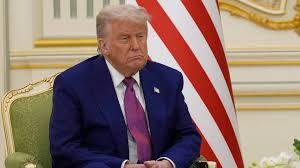
India News : The recent Supreme Court decision is being viewed as a significant setback to former President Donald Trump’s economic policies. In April 2025, Trump imposed heavy tariffs on goods from several countries, citing national security concerns. A tariff is a tax on imported goods, making them more expensive and providing an advantage to domestic industries.
Controversy Centered on IEEPA
At the heart of this dispute is the International Emergency Economic Powers Act (IEEPA), enacted in 1977. The law grants the President special powers during serious threats such as war, major economic threats from foreign adversaries, or extraordinary international crises. Under IEEPA, the President can block, control, or implement certain foreign economic transactions immediately. Trump relied on this law to justify imposing tariffs.
Supreme Court Questions Presidential Authority
In November last year, the Supreme Court questioned the legal basis of Trump’s tariffs. The justices asked whether the President has the authority to impose global tariffs in this manner. After a lengthy hearing, the Court ruled that Trump could only impose a 15% tariff for 150 days, and only if a solid justification exists.

The Court also noted that IEEPA does not explicitly mention the word “tariff,” nor does it clearly define the President’s limits of authority. This ruling restricts presidential powers under IEEPA and sets an important legal precedent for similar economic actions in the future.