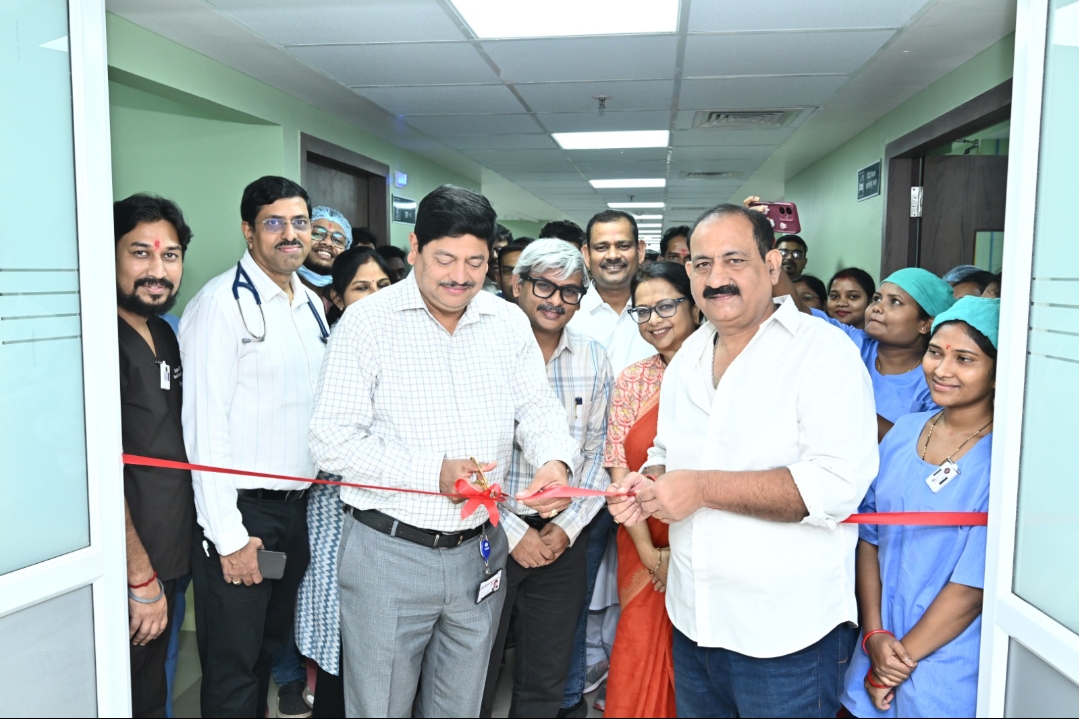
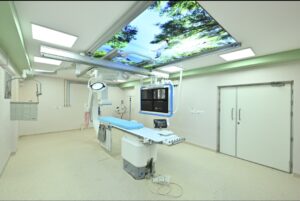
Jamshedpur: Tata Main Hospital (TMH) has strengthened its cardiac care infrastructure with the inauguration of a new Heart Care Unit equipped with a state-of-the-art Cardiac Catheterisation Laboratory (Cath Lab).
D B Sundara Ramam, Vice President, Corporate Services, Tata Steel, inaugurated the upgraded unit on Thursday, September 17. Sanjeev Kumar Choudhary, President, Tata Workers’ Union, attended the programme as the Guest of Honour.
The new unit brings cardiac care services under one roof. All beds in the upgraded facility are equipped to function as critical care beds, with continuous monitoring and ventilator support available when required. This allows patients whose condition deteriorates to receive immediate escalation of care without being shifted to another part of the hospital.
The facility further strengthens TMH’s 24×7 emergency cardiac care and primary angioplasty services. The services are available to the general public as well as Tata Steel employees, benefiting patients from Jamshedpur, the Kolhan region and neighbouring areas.
“This is an upgradation of cardiac services, not just a new laboratory. Cardiac care was earlier spread across several wards; it is now in one unit where every bed is monitored and ventilator-ready, with a state-of-the-art Cath Lab alongside,” said Dr Vinita Singh, General Manager, Medical Services, TMH.
Dr Mandar Mahavir Shah, Chief Consultant and Head of the Department of Cardiac Sciences, highlighted the contribution of the medical team to the department’s growth. “Behind the machines and procedures is a dedicated team. Alone we can do so little; together we can do so much. When we started in 2015, we were a small team with one Cath Lab. To see how far we have come is immensely satisfying,” he said.
The expansion also marks the beginning of the next phase of cardiac care at TMH. The hospital’s future plans include paediatric cardiology, transcatheter valve procedures such as Transcatheter Aortic Valve Replacement (TAVR) and Transcatheter Edge-to-Edge Repair (TEER) for high-surgical-risk patients, 3D mapping for complex rhythm disorders, and the introduction of a Cardiothoracic and Vascular Surgery (CTVS) programme.
TMH began its Cardiac Intervention Programme in March 2015 with a single Cath Lab and one interventional cardiologist. Over the past decade, it has expanded into a Department of Cardiac Sciences with four cardiologists, supported by cardiac nurses, Cath Lab technicians and critical care teams.

Since its inception, the department has performed more than 22,000 cardiac procedures. The number of angioplasties has increased from 245 in 2015 to 934 in 2025, while angiographies, pacemaker implants and electrophysiology procedures have also witnessed steady growth.
TMH has introduced several advanced cardiac care technologies that were among the first of their kind in Jharkhand. Within six months of launching its cardiac intervention programme, the hospital became the first centre in the state to establish a dedicated electrophysiology laboratory. It subsequently introduced Jharkhand’s first leadless pacemaker, a capsule-sized device implanted inside the heart without wires, as well as left bundle branch pacing, which uses the heart’s natural conduction system.
In 2019, TMH became the first centre in Jharkhand to offer high-definition intravascular imaging and pressure-wire assessment in-house. In 2024, the hospital added intravascular lithotripsy, a technology that uses shockwaves to break calcium in heavily blocked arteries. TMH currently performs the highest number of rotablation procedures in Jharkhand, according to the hospital.
Alongside its clinical expansion, the Department of Cardiac Sciences has strengthened its academic programme through a National Board-accredited DrNB super-speciality course, offering two seats annually.
The upgraded Heart Care Unit is expected to further consolidate TMH’s cardiac services and provide advanced emergency and interventional cardiac care to patients in Jamshedpur and surrounding regions.