Ujjain: The ‘Deepotsav’ (Festival of Lights) begins today at the world-renowned Jyotirlinga, the Shri Mahakaleshwar Temple in Ujjain, Madhya Pradesh. In keeping with tradition, a special ‘Maha-puja’ (grand worship ceremony) will be held in the temple’s Nandi Hall on the occasion of Dhanteras. The ritual commenced at 9:00 AM. For one hour, prayers and ‘abhishek’ (ritual bathing) will be offered to Lord Ganesha, Goddess Mahalakshmi, and Lord Mahakal. During this ceremony, a silver coin will be offered to Lord Mahakal, and prayers will also be dedicated to Lord Kubera (the deity of wealth) and silver coins.
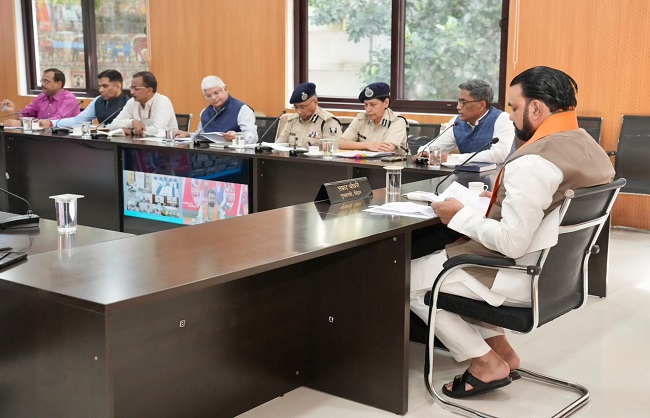
Priests from the ‘Purohit Samiti’ (Priests’ Committee) will conduct the ‘Maha-puja’ with prayers for good health, prosperity, the well-being of the public, and the welfare of the entire world. The proceedings will begin with the worship of Lord Ganesha and Goddess Mahalakshmi, followed by ‘Panchamrit-puja’ and ‘Rudrabhishek’ for Lord Mahakal. The event will be attended by District Collector Roshan Kumar Singh, Superintendent of Police (SP) Pradeep Sharma, Temple Administrator Pratham Kaushik, and various priests and temple officials.
According to Lokesh Vyas, President of the ‘Purohit Samiti’, this Dhanteras ritual is an integral part of the temple’s long-standing tradition. Prayers will be offered for the happiness, prosperity, and health of all, as well as for the welfare of the world. With this ‘Maha-puja’, a series of religious events marking the ‘Deepotsav’ will commence at the Mahakal Temple.
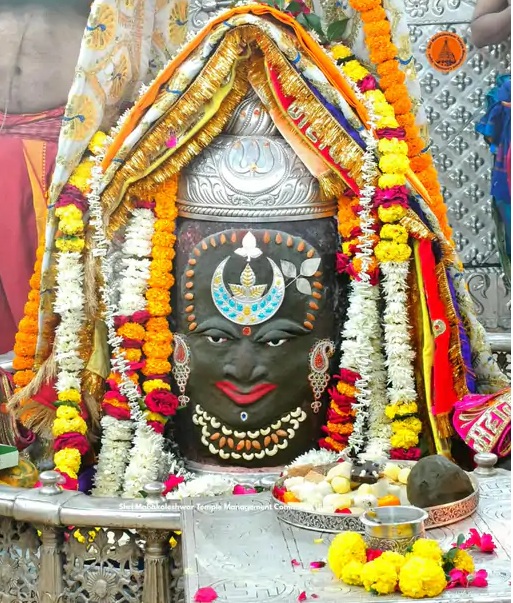
Lord Mahakal adorned with silver crescent, trident, and crown
On the occasion of Dhanteras, the ‘Bhasma Aarti’ (ash-offering ritual) for Lord Mahakal took place early this morning at 4:00 AM. After the temple doors were opened, ‘Swasti Vachan’ (recitation of auspicious hymns) was performed near the idol of Veerabhadra in the ‘Sabha Mandap’ (assembly hall). Following the ringing of a bell—a symbolic act of seeking the Lord’s permission—the silver doors were opened. Subsequently, the priests performed the traditional rituals within the sanctum sanctorum, including the removal of the deity’s previous adornments, followed by worship and ‘abhishek’. After offering ‘Hari-om Jal’ (sacred water), the deity was bathed with ‘Panchamrit’—a mixture of milk, curd, ghee, sugar, honey, and fruit juices. Following the Panchamrit worship, an aarti was performed using camphor. Amidst the chanting of mantras, sacred ash (bhasma) was offered to Lord Mahakal. Subsequently, the Jyotirlinga was adorned with a silver crescent moon and trishula (trident), a silver crown featuring Sheshnag (the serpent deity), a silver garland of skulls, and a rudraksha rosary. Offerings of bhang, sandalwood paste, and dry fruits were presented to the Lord. The deity was further decorated with garlands of fragrant flowers, and an *bhog* (ritual offering) consisting of fruits and sweets was placed before Him.
Manifestation from the Formless to the Formed upon the Offering of Sacred Ash
A large number of devotees participated in the Bhasma Aarti. The sacred ash was offered to Lord Mahakal on behalf of the Maha Nirvani Akhara. According to religious belief, upon the offering of this sacred ash, Lord Mahakal transitions from a formless state to a manifest, tangible form to grant darshan (divine vision) to His devotees. During the aarti, the temple premises resonated with chants and acclamations in honor of Baba Mahakal. Devotees also sought the blessings of Nandi Maharaj, whispering their heartfelt wishes into his ears and praying to Baba Mahakal for happiness and prosperity.