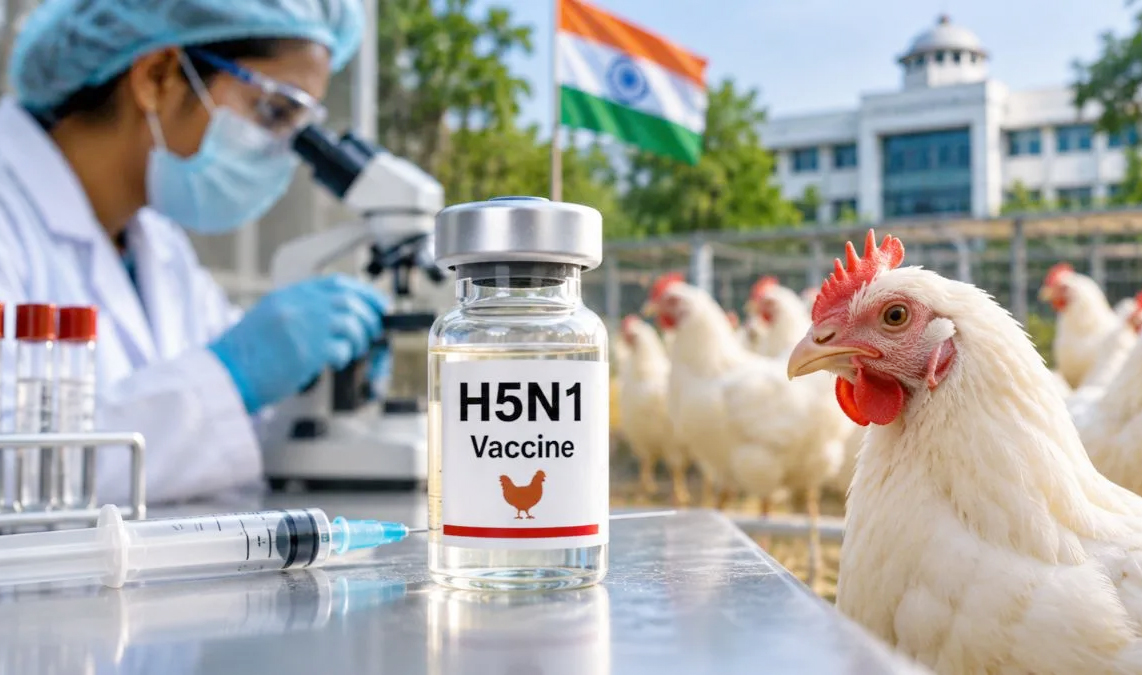
New Delhi: India has developed an indigenous H5N1 vaccine to protect poultry from bird flu. The vaccine was launched in Bhopal by the Union Minister of Agriculture and Farmers’ Welfare, Shivraj Singh Chouhan. The first case of bird flu in the country was reported in 2006; since then, more than 500 outbreaks of H5N1 and H5N8 viruses have been recorded.
Developed by experts at the High Security Animal Disease Laboratory (HSADL) under the Indian Council of Agricultural Research (ICAR), this vaccine is considered a significant achievement for the country. Until now, no indigenous vaccine was available in India to provide protection against this disease.
Vaccine Developed Against a Specific Strain of the H5N1 Virus
The vaccine has been developed specifically against the ‘clade 2.3.2.1a’ strain of the H5N1 virus. According to the Ministry of Agriculture, this is the first indigenous vaccine developed in India to target this particular viral clade. It is priced at ₹1 to ₹2 per dose, making it accessible even to small-scale poultry farmers.
Bird Flu Causes Heavy Losses to the Poultry Industry
H5N1 is a subtype of the Influenza A virus, commonly referred to as bird flu or Highly Pathogenic Avian Influenza (HPAI). It primarily infects wild birds and poultry. The mortality rate among birds infected with this virus can reach nearly 100 percent.
During bird flu outbreaks, large-scale culling of birds is often necessary to control the spread of the infection, which results in significant economic losses for poultry farmers. The disease was first detected in India in 2006, and since then, over 500 outbreaks of H5N1 and H5N8 viruses have been documented. Risk of Infection in Humans
Bird flu primarily affects birds, but it has also been detected in certain mammals. In rare cases, it can infect humans as well. According to the World Health Organization (WHO), H5N1 infection in humans can lead to severe illness and a high mortality rate.
Humans may be at risk of infection through contact with the bodily fluids, saliva, respiratory droplets, or feces of infected birds or other animals. Individuals working on poultry farms or those in direct contact with infected animals need to exercise extra caution.

Touching one’s eyes, nose, or mouth after coming into contact with contaminated materials can also increase the risk of infection. Therefore, those who interact with animals should strictly follow personal hygiene and safety measures.
How Safe Is It to Consume Chicken and Eggs During a Bird Flu Outbreak?
During a bird flu outbreak, consuming chicken and eggs that have been thoroughly cooked poses no risk of infection. According to the World Health Organization, food should be cooked to a temperature of at least 70°C to ensure the virus is inactivated.
The Food Safety and Standards Authority of India (FSSAI) advises that it is safe to consume chicken cooked to an internal temperature of approximately 74°C. Eggs should also be cooked completely.
During such periods, one should avoid consuming raw eggs, eggs with runny yolks, or undercooked chicken. Raw chicken must be kept separate from cooked food, and hands, utensils, and surfaces should be thoroughly cleaned after food preparation.