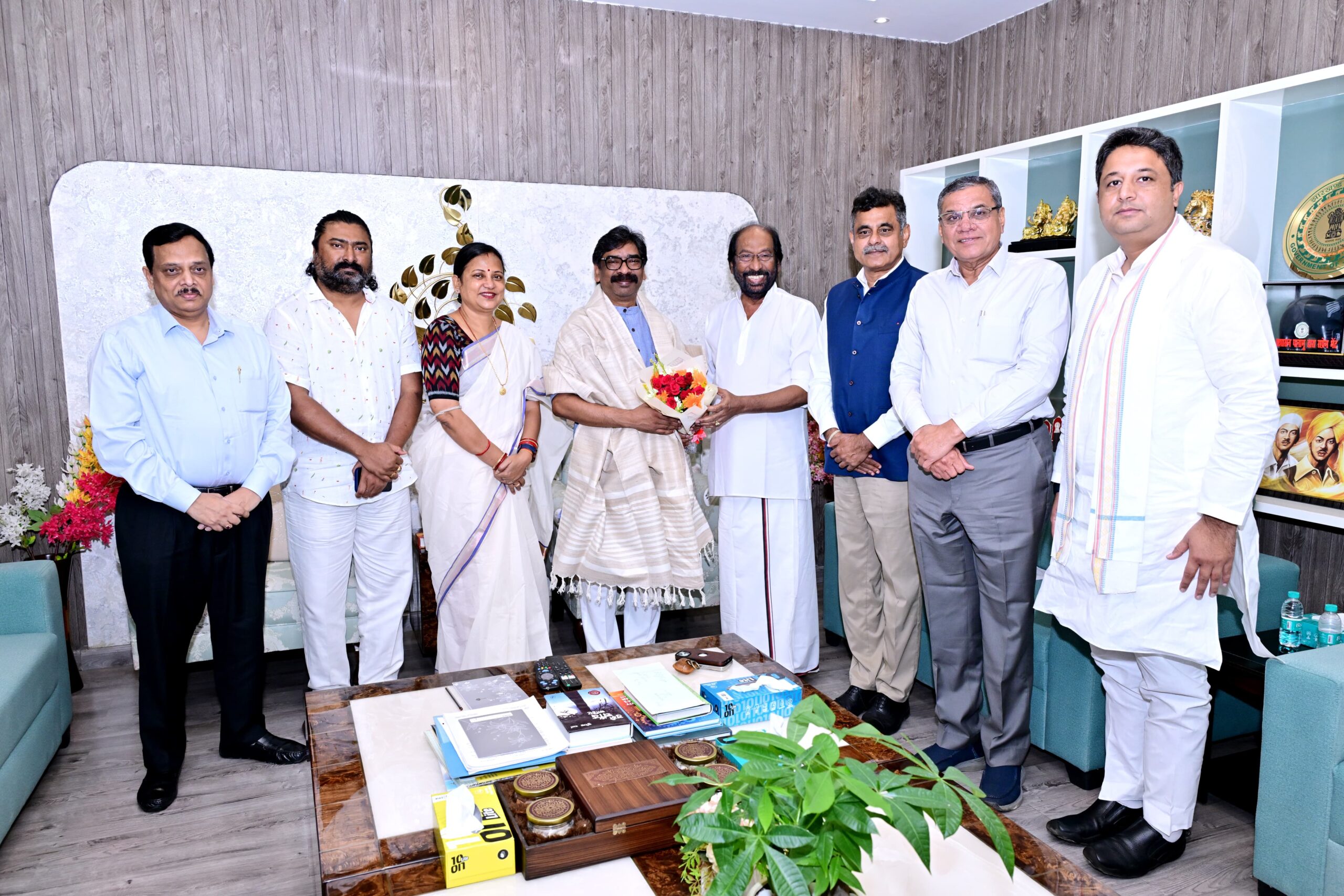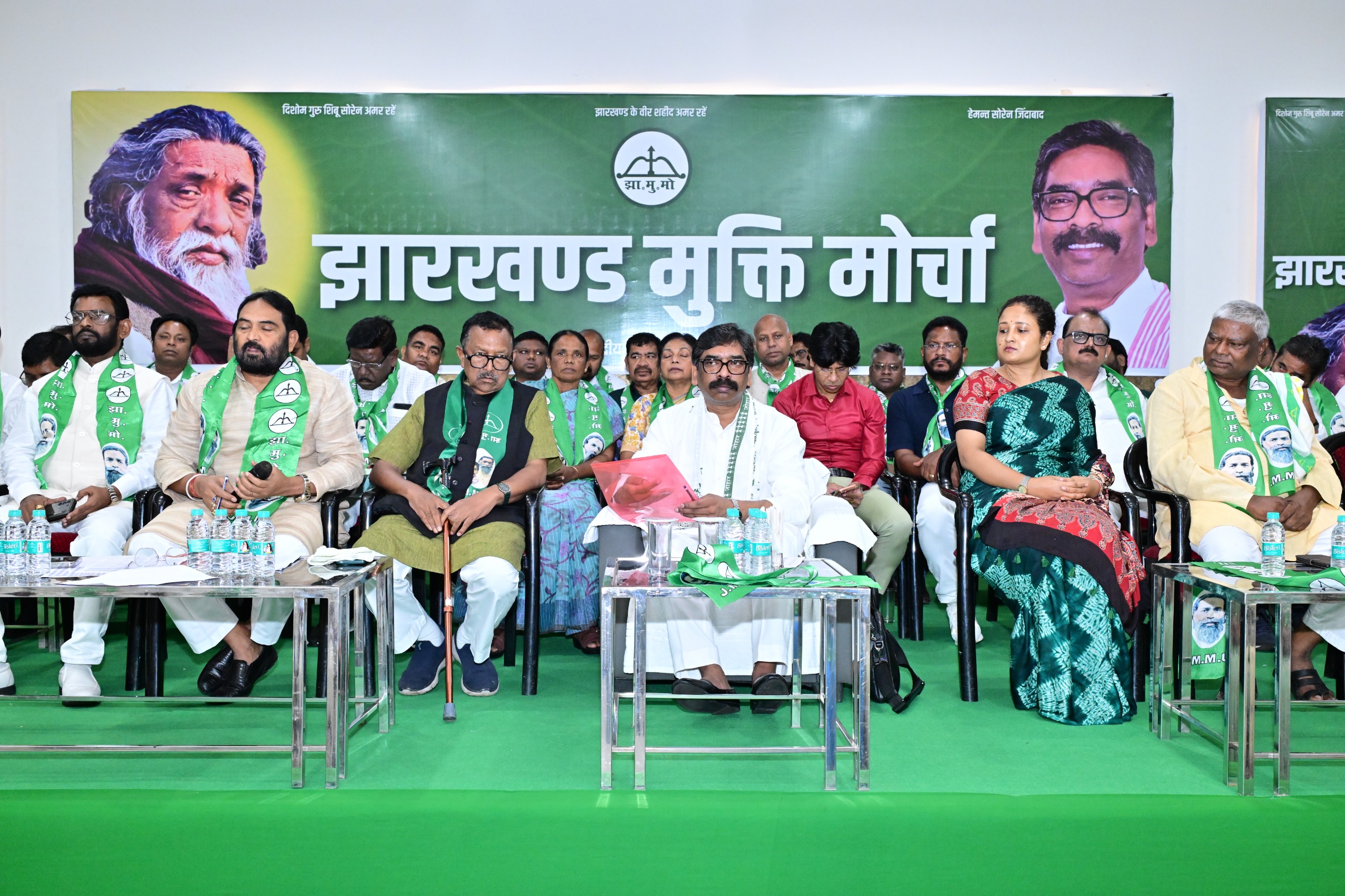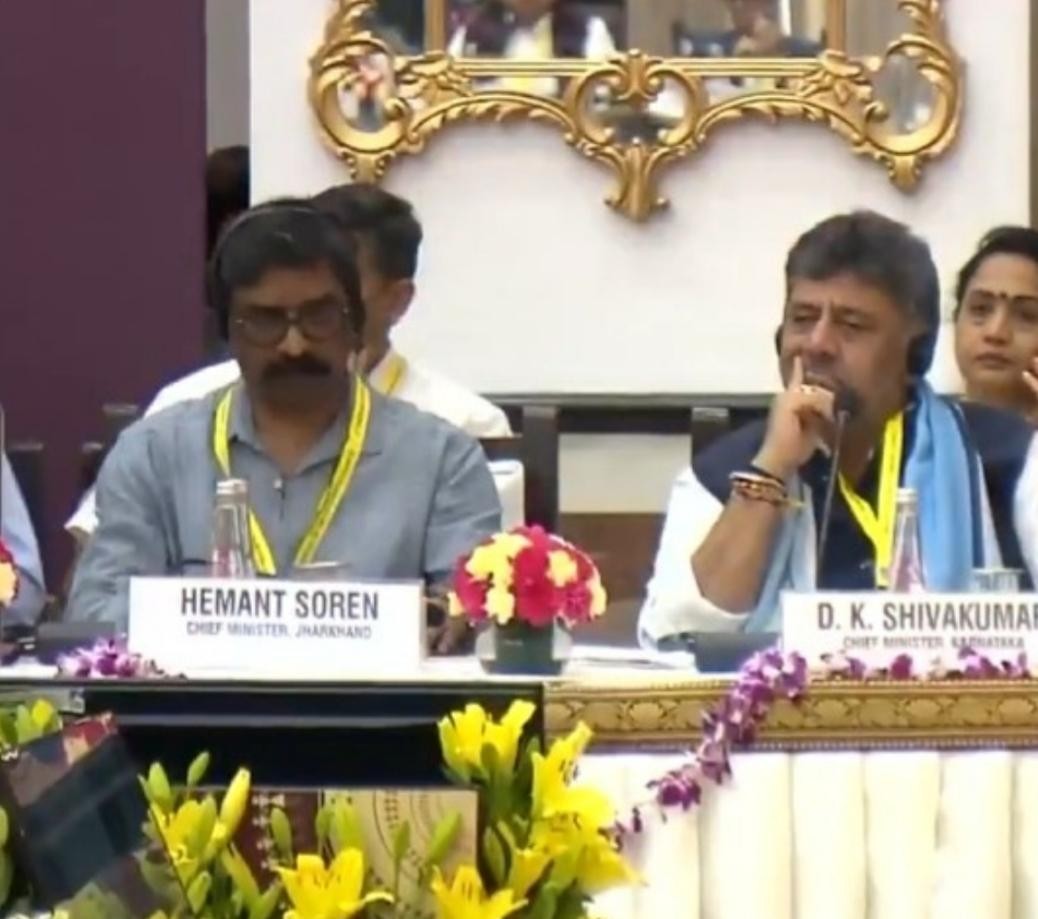
India News : Chief Minister Hemant Soren, while addressing the 11th Governing Council Meeting of NITI Aayog, presented Jharkhand’s vision for inclusive and sustainable development. He emphasized that the state’s vast mineral wealth would be truly meaningful only when it is effectively linked with its human capital.
He asserted that Jharkhand should no longer be viewed merely as a mineral-producing state but as an active partner in India’s development journey. Elaborating on this vision, the Chief Minister said that the state’s natural resources should undergo value addition within Jharkhand itself, supported by the development of manufacturing industries that create employment opportunities for local people.
He urged the Central Government to extend support for establishing critical minerals-based industries, as well as knowledge, research, and innovation centres in the state. He also advocated for promoting large-scale investments in sectors such as textiles, electronics, green energy, logistics, and agro-food processing.
Soren stated that Jharkhand is making continuous efforts to transform itself into a new hub of industry and employment by encouraging AI-based mineral exploration and adopting sustainable mining practices. He added that the state looks forward to the Centre’s cooperation and guidance in this endeavour.
Highlighting the importance of social development, the Chief Minister described education, healthcare, and skill development as the fundamental pillars of growth. He reiterated the state’s commitment to contributing towards the national vision of “Viksit Bharat @2047.”
Focus on Anganwadi Infrastructure and Nutrition
The Chief Minister informed the council that out of 38,000 Anganwadi centres in Jharkhand, around 15,000 still lack their own buildings. Despite these infrastructural challenges, the state has achieved notable improvements in tackling malnutrition through initiatives such as the Poshan Abhiyaan and SAAMAR programme.
He noted that children are being provided eggs on a daily basis as part of nutritional support, while the state government is constructing 5,000 new Anganwadi buildings using its own resources.
Education, Skill Development and Employment
Soren highlighted that students from the state’s CM Schools of Excellence are now securing admissions to prestigious institutions such as IITs and medical colleges. The government is working towards establishing 5,000 model schools across Jharkhand.
He requested the Centre to increase the number of PM SHRI Schools and Kendriya Vidyalayas in the state and also urged the establishment of an NCERT Regional Centre in Jharkhand.
The Chief Minister stated that the state government is connecting more than one lakh youth with employment opportunities every year. Under the SARATHI scheme, 6.76 lakh young people have received skill training. Youth are being trained in emerging sectors such as Artificial Intelligence (AI), Electric Vehicles (EVs), drones, and solar technology, while 53,000 women have been trained in modern technical fields.
Strengthening Healthcare Services
Emphasising the need to expand healthcare services to the grassroots level, Soren said that 1,276 medicine outlets are currently operating in rural areas of the state. He pointed out that proposals to increase undergraduate and postgraduate seats in medical colleges are still awaiting approval.
He also informed that the state is working on developing AI-based digital health profiles for citizens to strengthen healthcare delivery.
Sports Development and Recognition
The Chief Minister said that athletes from Jharkhand are excelling in hockey, football, and athletics, earning recognition at both national and international levels. He requested the establishment of a Sports University and Centres of Excellence in the state to further nurture sporting talent.
Agriculture as a Tool Against Malnutrition
Soren stated that the state has developed more than 10 lakh nutrition gardens and undertaken fruit plantation over 1.5 lakh acres of land. He highlighted that Jharkhand’s mangoes have now reached international markets.
Describing agriculture as an effective means to combat malnutrition, he underlined its importance in strengthening the rural economy.
Digital Governance and Data Management
The Chief Minister informed the council that Jharkhand is developing an AI-based CM Data Intelligence Platform, while work is also underway on an Integrated Command and Control Centre.
He urged the Centre to ensure timely data sharing mechanisms, while stressing the importance of transparency in Direct Benefit Transfer (DBT) systems and stronger measures to prevent digital fraud.
Key Demands Placed Before the Central Government
- Early release of the remaining ₹6,000 crore under the Jal Jeevan Mission.
- Settlement of the ₹1.36 lakh crore outstanding dues from coal companies.
- Revision of the norms governing the District Mineral Foundation Trust (DMFT).
- Simplification of the land acquisition process.
- Integration of various school education schemes and funding mechanisms.
- Early approval for the remaining two medical colleges out of the six proposed under the PPP model, of which four have already received clearance.
- Providing Jharkhand with opportunities to host national, Asian, and international sporting events.
- Granting necessary relaxations and simplification in land acquisition and ownership procedures in areas falling under the command regions of DVC, CCL, ECL, and other central public sector undertakings, to facilitate the development of social infrastructure.
Concluding his address, Chief Minister Hemant Soren stated that Jharkhand is a state rich in natural resources and human potential. With coordinated efforts and support from the Central Government, the state can emerge as a stronger contributor to India’s overall growth and development.