Ranjan Shaw
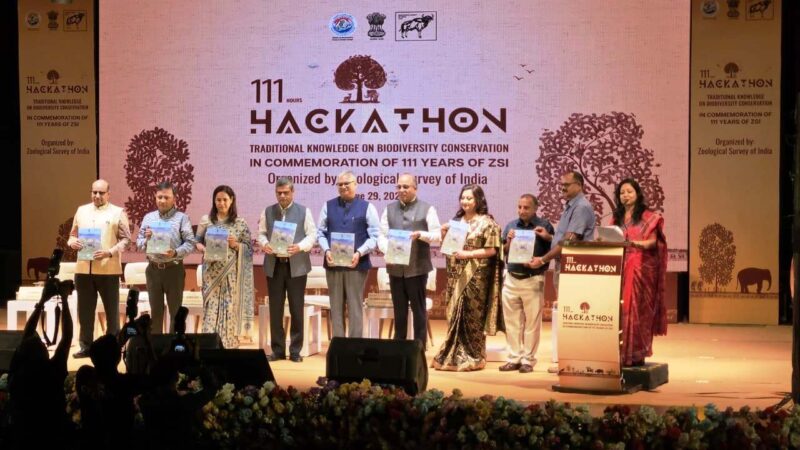
India News : The Zoological Survey of India (ZSI) on Monday marked its 111th Foundation Day by launching a 111-hour National Biodiversity Hackathon aimed at promoting innovative solutions for biodiversity conservation by combining traditional ecological knowledge with modern science.
The hackathon, themed “Traditional Knowledge for Biodiversity Conservation,” is being held simultaneously across ZSI’s 16 regional centres and has brought together students, researchers, young scientists and innovators from across the country. The initiative seeks to encourage interdisciplinary research and strengthen youth participation in biodiversity conservation.
The Foundation Day celebrations were attended by Tanmay Kumar, Secretary, Ministry of Environment, Forest and Climate Change (MoEFCC), who said scientific research, innovation and public participation would play a key role in shaping India’s future conservation strategy.
Other dignitaries present included Ved Prakash Mishra, Joint Secretary, MoEFCC; Ramesh Kumar Pandey, Additional Director General, MoEFCC; Dr Dhriti Banerjee, Director, ZSI; Dr Kanad Das, Director, Botanical Survey of India; and Dr C. Raghunathan, Scientist-F, ZSI.
Established in 1916, ZSI has documented more than 5,500 new animal species over the past 111 years, making it one of India’s leading institutions for faunal research and biodiversity documentation. Scientists from the organisation continue to survey ecologically significant regions, including the Himalayas, the Western Ghats, coastal ecosystems and islands, to identify new species and update faunal records.

The organisation also maintains the National Zoological Collections, one of the country’s largest repositories of animal specimens, and has expanded its research capabilities through technologies such as DNA barcoding, molecular taxonomy, GIS-based analysis and digital biodiversity databases.
Addressing the gathering, Dr Dhriti Banerjee said the institution’s 111-year journey reflected its commitment to scientific excellence and conservation. She added that integrating traditional taxonomy with modern technologies and mentoring young researchers remained among the organisation’s priorities.
Dr Kanad Das stressed the need for greater collaboration between institutions working on plant and animal diversity, while Dr C. Raghunathan said traditional ecological knowledge could complement modern scientific approaches in developing sustainable conservation strategies.
As ZSI enters its 112th year, the organisation said it would continue to strengthen biodiversity research through technological innovation, scientific collaboration and greater engagement with young researchers.