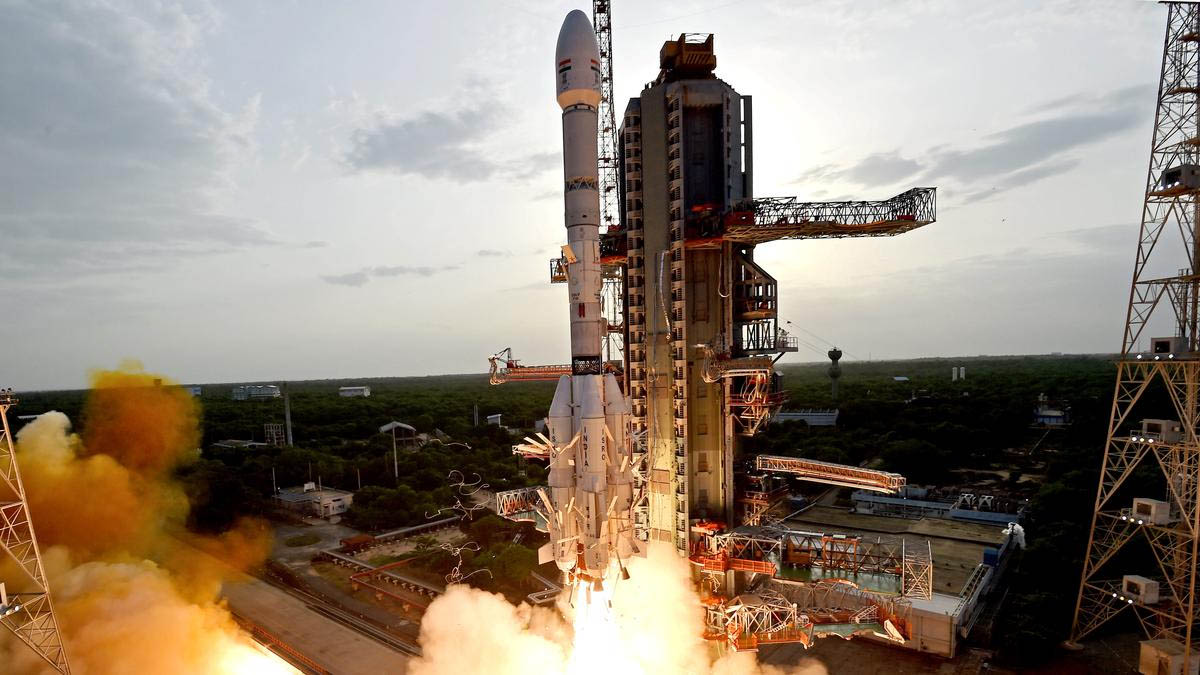
India News : The Indian Space Research Organisation (ISRO) achieved another major milestone on Friday by successfully launching the EOS-05 Earth observation satellite from the Satish Dhawan Space Centre in Sriharikota. The GSLV-F17 rocket placed EOS-05 into its intended Sub-Geosynchronous Transfer Orbit (Sub-GTO).
The launch took place at 2:55 am IST from the Second Launch Pad at Satish Dhawan Space Centre. The mission marked the 19th flight of India’s Geosynchronous Satellite Launch Vehicle (GSLV).
GSLV-F17 Successfully Completes Mission
ISRO Chairman Dr V. Narayanan expressed happiness over the successful mission and said that the GSLV-F17 vehicle had successfully delivered the advanced EOS-05 Earth observation satellite into orbit.
EOS-05 is a state-of-the-art Earth observation spacecraft. According to ISRO, it is India’s first imaging satellite designed to operate from geosynchronous orbit.
Satellite to Support Earth Observation Applications
The EOS-05 mission is expected to strengthen India’s Earth observation capabilities. Data from Earth observation satellites can support applications including agriculture, water resources, environmental monitoring and disaster management.
The GSLV-F17 is the 19th GSLV flight and used a four-metre-diameter ogive composite payload fairing for the mission.
Jitendra Singh Congratulates ISRO Team
Union Minister of State for the Department of Space Jitendra Singh congratulated the ISRO team for the successful launch. He described the mission as another major step for India in space.
Students, teachers and space enthusiasts also gathered at Sriharikota to witness the launch. The launch took place amid rain.

Another giant leap for India in Space!
Kudos to Team @isro on the successful launch of GSLV-F17/EOS-05.
EOS-05 is a state-of-the-art Earth Observation satellite and India’s first imaging satellite from Geosynchronous Orbit, enabling advanced imaging across visible, infrared,… pic.twitter.com/1HHJrWM7ze
— Dr Jitendra Singh (@DrJitendraSingh) September 3, 2026
GSLV-F16 Previously Launched NISAR
The latest mission follows the successful GSLV-F16 launch of the NASA-ISRO Synthetic Aperture Radar (NISAR) satellite in July 2025. GSLV-F16 was the previous GSLV mission before GSLV-F17.