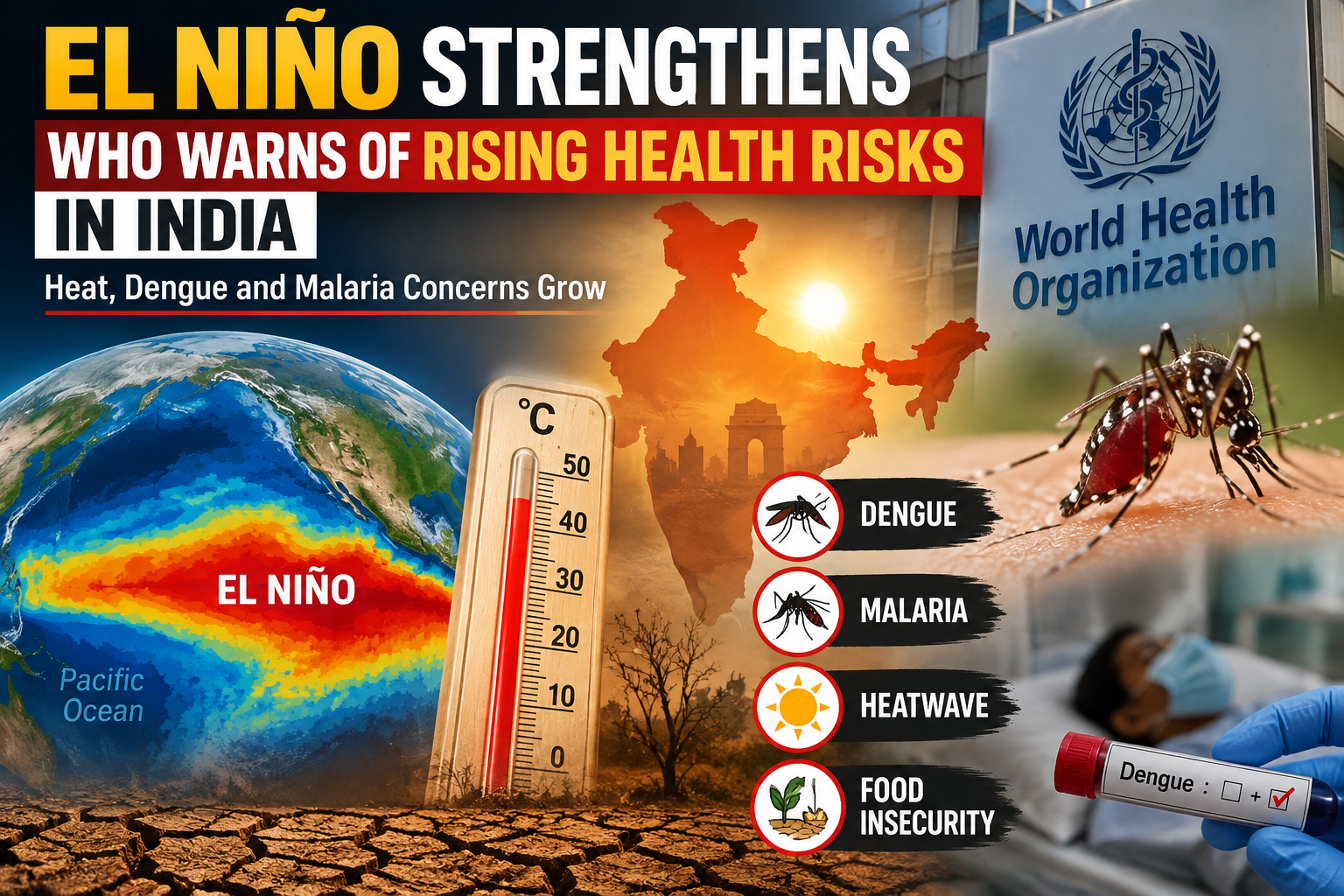
New Delhi : El Niño, the climate phenomenon that affects weather patterns across several parts of the world, is continuing to strengthen. Amid this development, the World Health Organization (WHO) has included India among countries facing high health risks.
According to the WHO’s assessment, much of South Asia could experience below-normal rainfall and higher temperatures between August and October. The warning comes at a time when several parts of India are reporting cases of mosquito-borne diseases.
The WHO made the assessment in its report, ‘Global Public Health Situation Analysis – El Niño 2026’, released on September 5.
Dengue and Malaria Cases Rise in Delhi
Delhi reported 90 dengue cases during August, the highest number recorded in a single month so far this year. As of August 29, the total number of dengue cases in the national capital had reached 311.
According to municipal data, malaria cases also increased from 17 in July to 53 in August. A total of 119 malaria cases have been reported in Delhi so far this year.
WHO Does Not Directly Link Current Cases to El Niño
However, the World Health Organization has not directly linked the current dengue or malaria cases in India to El Niño.
According to the organisation, El Niño can be a factor that increases health risks. Its impact may depend on local weather conditions, the vulnerability of communities and the capacity of the health system.

Rising Temperatures a Major Concern
Increasing temperatures in India are among the WHO’s key concerns. Extreme heat can raise the risk of heat exhaustion, heatstroke and other heat-related illnesses.
High temperatures can also worsen the condition of people suffering from heart, lung, kidney and metabolic diseases. Pregnant women and newborns may also face increased health risks due to extreme heat.
Rainfall Changes Could Affect Food Security
Changes in rainfall patterns could affect food production, increasing the risk of malnutrition and food insecurity.
Areas along the India-Nepal and India-Bhutan borders have also been identified as vulnerable regions. Weather-related displacement in such areas could increase the risk of infectious diseases spreading across borders.
During El Niño, sea surface temperatures in the central and eastern tropical Pacific Ocean become warmer than normal. This can influence rainfall and temperature patterns across several parts of the world.