- Head coach states the goal is to prepare players to perform in various positions; young talent will also get opportunities
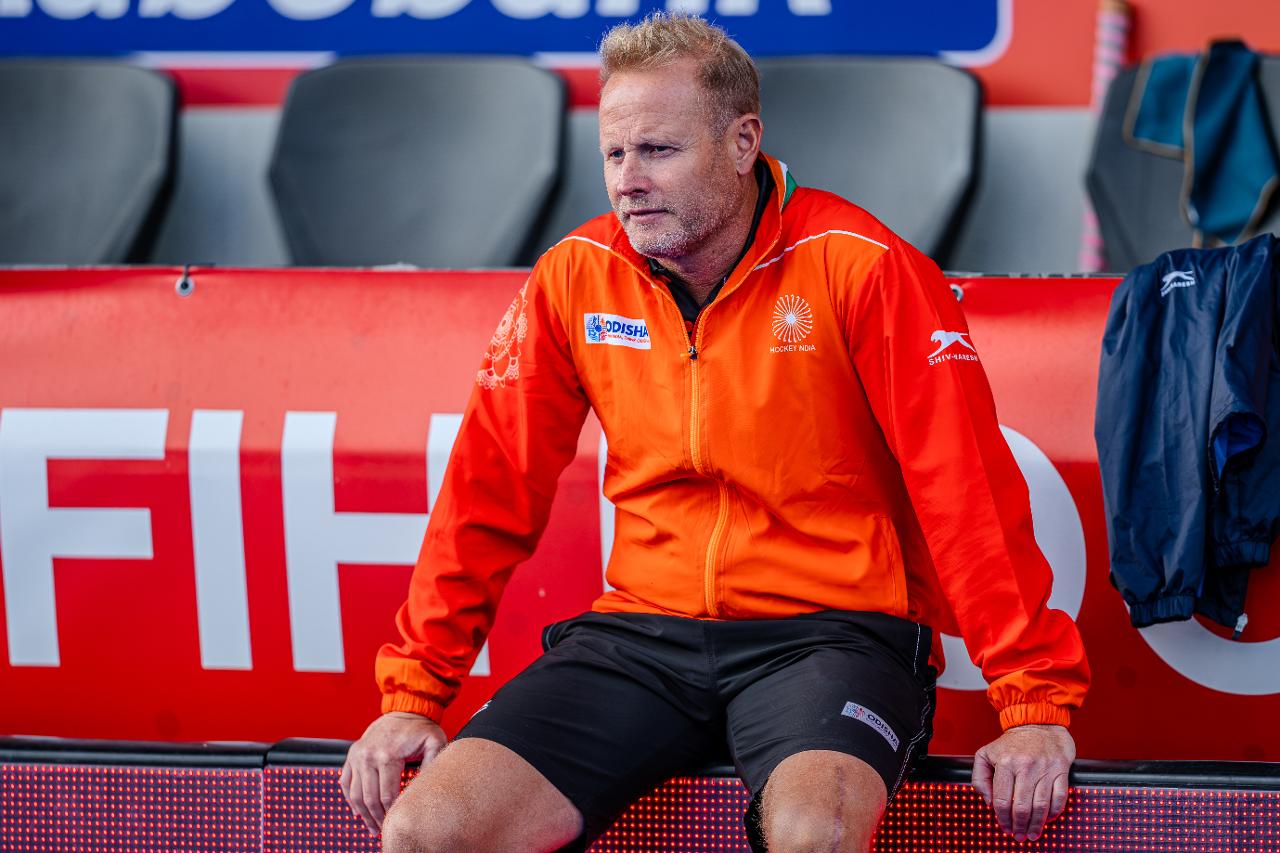
New Delhi: Ahead of the upcoming Madhya Pradesh Women’s Asian Champions Trophy in Bhopal, Sjoerd Marijne, head coach of the Indian women’s hockey team, aims to foster greater depth, versatility, and competition within the squad. The three-time champions will look to defend their title at the tournament, which is set to take place in Bhopal from November 19 to 28. India will face challenges from China, Japan, South Korea, Thailand, and Malaysia.
Following their historic gold-medal win at the Asian Games in Japan, the Indian team is now preparing for another significant competition. A key focus has been placed on training players to adapt to different positions and providing emerging talent with the opportunity to prove themselves.
In an interview with Hockey India, Marijne noted that the team’s primary objective is to refine their game and ensure that the progress made during training sessions is maintained even under the pressure of competitive play.
Speaking about the work undertaken during the national camp, Marijne said, “We are focused on building greater depth within the squad, which has also made our training sessions more competitive. The players understand this, which is why they are giving their best and working extremely hard.”
Regarding the challenge of playing at a new stadium with a new pitch at the International Sports Complex in Nathu Barkheda, Bhopal, he remarked, “It is simply a matter of adapting to the conditions. We play on various types of pitches throughout the year, and this will be a similar adjustment. The pitch at the Asian Games was quite difficult and uneven, so we aren’t overly concerned. Opposing teams will have to navigate the same conditions, so it is not a cause for worry for us.” Regarding the plan to test players in different positions during the tournament, Marijne stated, “The objective is to build greater depth within the squad. We want players to be capable of playing in various positions. If a player gets injured—especially in a tournament like the Olympics—this proves to be very helpful. Furthermore, it is highly beneficial for the players’ own development.”
Providing an example, he added, “Ishika, for instance, typically plays as a striker, but she is now occasionally taking on the role of a midfielder. The same applies to Rutuja (Dadaso Pisal). They need to learn to adapt to playing in different positions. We want to see how this contributes to our overall game strategy and helps us make improvements to the team.”
Marijne noted that young players would also have the opportunity to showcase their talent during this tournament. “Young players like Pooja (Sahu) will get a chance,” he said. “Jyoti Singh is joining the squad for the first time, and Mumtaz is making a comeback after a long absence. I believe this is an excellent platform for all of them to demonstrate their potential.”

Addressing the challenge of facing strong opponents—including China—following the gold-medal win at the Asian Games, Marijne remarked, “You never know what kind of squad other teams might bring to a tournament. However, the most important thing—the point I have emphasized throughout the year and which remains our focus here—is that we must concentrate on ourselves. We need to evaluate which areas require improvement following the Asian Games and identify how we can perform better. That is our primary focus; who the opponent is, ultimately, does not matter.”
He further added, “We have worked on these aspects during our camp in Bengaluru, and now it is time to see how the players perform under the pressure of a tournament.” Regarding the players’ preparation for the upcoming FIH Pro League, Marin stated that future plans would be formulated based on the tournament schedule for December and January.
He said, “It will depend on which tournaments the players participate in during December and January. I want them to remain mentally and physically refreshed—ensuring they get adequate rest—while also staying prepared. It won’t be easy to face Argentina and Germany in February, immediately following a short break after tournaments like the Hockey India League.”
Marin added, “Getting back into the rhythm of international-level play is always challenging, as the level of competition on the international stage differs significantly from domestic matches. However, this is not unique to India; it is a challenge faced by every nation. Players need time to adapt to the conditions. Therefore, our primary challenge will be how quickly we can bring the girls back to that required level and rhythm.”