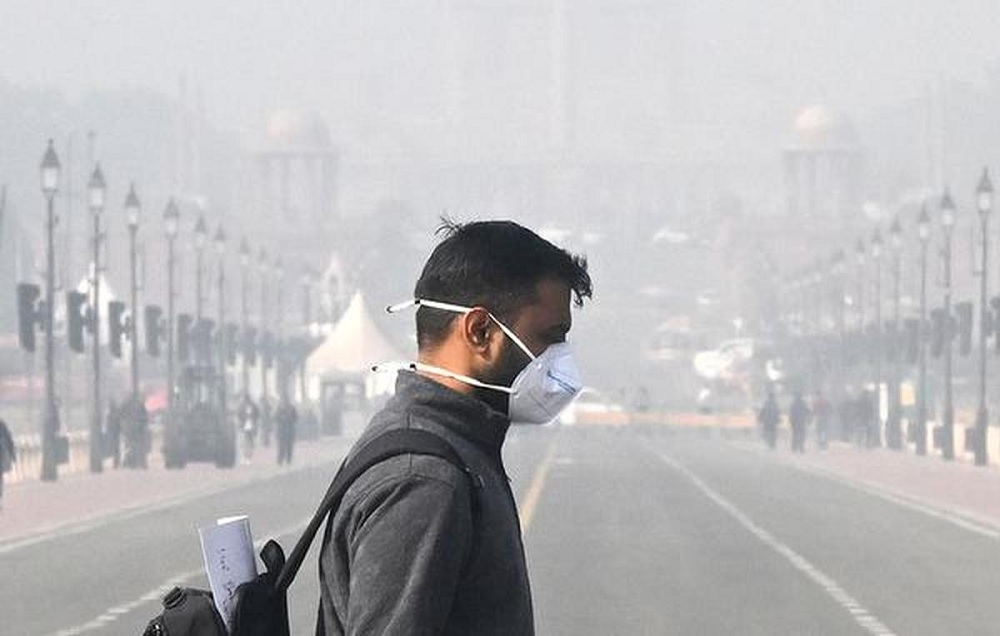
New Delhi: Pollution levels in Delhi-NCR continue to rise ahead of Diwali, with the air in the capital becoming suffocating for residents. In many areas, the Air Quality Index (AQI) has crossed the 400 mark. In light of this, the Commission for Air Quality Management (CAQM) has implemented Stage III of the Graded Response Action Plan (GRAP-3) in Delhi-NCR, effective immediately.
According to data from the Central Pollution Control Board (CPCB), Delhi’s average AQI was recorded at 382 on November 6. By the morning of November 7, pollution levels in several parts of the capital had reached the ‘severe’ category. The highest AQI, 442, was recorded at IIT Delhi. Other areas also reported high levels: 433 in Punjabi Bagh, 421 in Mundka, 418 in Rohini, 417 in R.K. Puram, 414 in Sonia Vihar, and 413 in Najafgarh.
In Noida, an AQI of 415 was recorded in Sector 62, while levels in Sector 116, Sector 125, and Sector 150 stood at 287, 281, and 230, respectively. This indicates that the pollution situation remains a cause for concern across both Delhi and several areas within the NCR.
To control pollution, GRAP-3 mandates a ban on non-essential construction and demolition activities. Additionally, restrictions have been imposed on soil excavation, piling work, the operation of open-air ready-mix concrete plants, and mining activities.
Furthermore, the operation of BS-III petrol and BS-IV diesel four-wheeled vehicles has been prohibited in the affected areas of Delhi and the NCR. The use of diesel generators will also be prohibited, except for essential services. Meanwhile, private companies have been advised to adopt ‘work-from-home’ or hybrid working arrangements.

According to forecasts from the Meteorological Department and IIT, air quality in Delhi-NCR may deteriorate further in the coming days, with pollution levels potentially reaching the ‘severe’ category. In light of this, the administration has urged the public to exercise caution and take necessary measures to protect themselves from pollution.