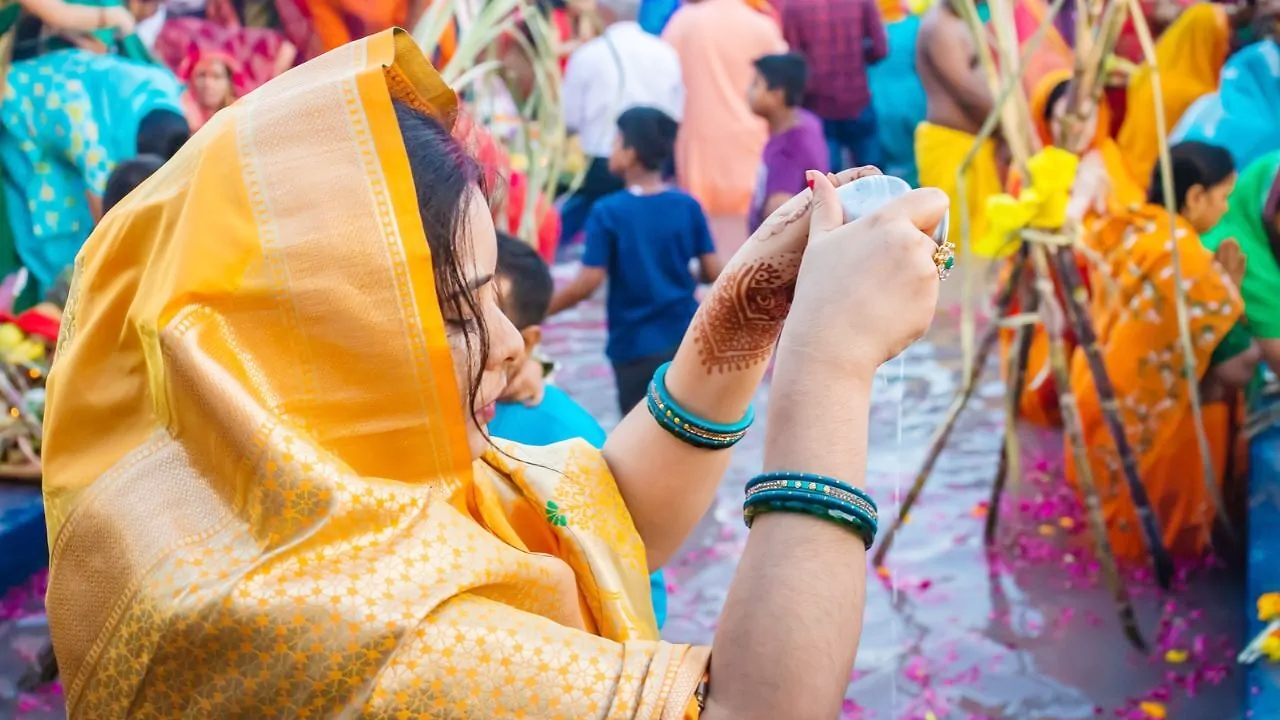
Ranchi: Chhath, the grand festival of faith and the worship of the Sun, begins this Friday with ‘Nahay-Khay’. There is an atmosphere of great enthusiasm and devotion among the devotees regarding this rigorous four-day fast and ritual. During this festival, Lord Sun and Chhathi Maiya are worshipped. A unique aspect of Chhath Puja is that offerings (arghya) are made not only to the rising Sun but also to the setting Sun. This is why it is considered the most significant festival associated with nature and the worship of the Sun.
The tradition of purity begins with ‘Nahay-Khay’
‘Nahay-Khay’ holds special significance on the first day of Chhath Puja. On this day, those observing the fast (vratis) bathe in the morning, put on clean clothes, and—after thoroughly cleaning their homes—begin preparations for the worship. Great care is taken while preparing food. Traditionally, the meal on this day consists of a dish made from bottle gourd (lauki), split Bengal gram (chana dal), and arwa rice (sun-dried, unboiled rice). The food is prepared in a satvik (pure/wholesome) manner, and the vratis partake of it first. Subsequently, other family members consume the food as *prasad* (blessed offering). With ‘Nahay-Khay’, several rules regarding diet and daily routine come into effect for those observing the fast. Strict attention is paid to purity during Chhath Puja; the utensils, stoves, and all materials used for the rituals are kept meticulously clean.
‘Kharna’ on the second day, followed by the *nirjala* (waterless) fast
The second day of the grand Chhath festival is known as ‘Kharna’. On this day, the vratis observe a fast throughout the day and, after bathing in the evening, worship Lord Sun. Following this, *kheer* (a sweet pudding) made with jaggery, rotis (flatbreads), and other traditional offerings are prepared. Once the worship is concluded, the vratis partake of the ‘Kharna’ prasad, which is then also distributed among the family members. Following ‘Kharna’, a rigorous 36-hour fast without water (nirjala vrat) begins. During this period, those observing the fast abstain from both food and water. This is considered one of the most demanding traditions of the Chhath Puja.
Offering ‘Arghya’ to the setting sun on the third day
On the third day of the grand Chhath festival—known as ‘Shashthi Tithi’—the ‘Sandhya Arghya’ (evening offering) is performed. On this day, the devotees observe a strict fast, remaining without water throughout the day. In the evening, family members, carrying the necessary ritual offerings, arrive at the ghats (embankments) along rivers, ponds, or other water bodies. Standing in the water, the devotees offer arghya to the setting sun. During this ritual, items such as fruits, thekua (a traditional sweet snack), coconuts, sugarcane, ginger, turmeric, and other customary offerings are arranged in bamboo trays (soop) and baskets (daura). The ghats resonate with traditional songs dedicated to Chhathi Maiya. The atmosphere becomes deeply devotional, illuminated by the glow of earthen lamps (diyas) and filled with a large gathering of devotees.

Conclusion on the fourth day with an offering to the rising sun
On the final day of the Chhath festival—’Saptami Tithi’—an offering (arghya) is made to the rising sun. Devotees arrive at the ghats before sunrise, awaiting the appearance of the Sun God (Bhaskar). As the first rays of the sun emerge, the arghya is offered. Following this, the devotees conclude their rituals and break their fast—a process known as paran. This marks the end of the 36-hour waterless fast.
In addition to Bihar, Jharkhand, and eastern Uttar Pradesh, the Chhath festival is celebrated with great enthusiasm by the Bihari diaspora living in various other parts of the country. In many places, the ghats are decorated locally, and special arrangements are made to ensure cleanliness and hygiene.