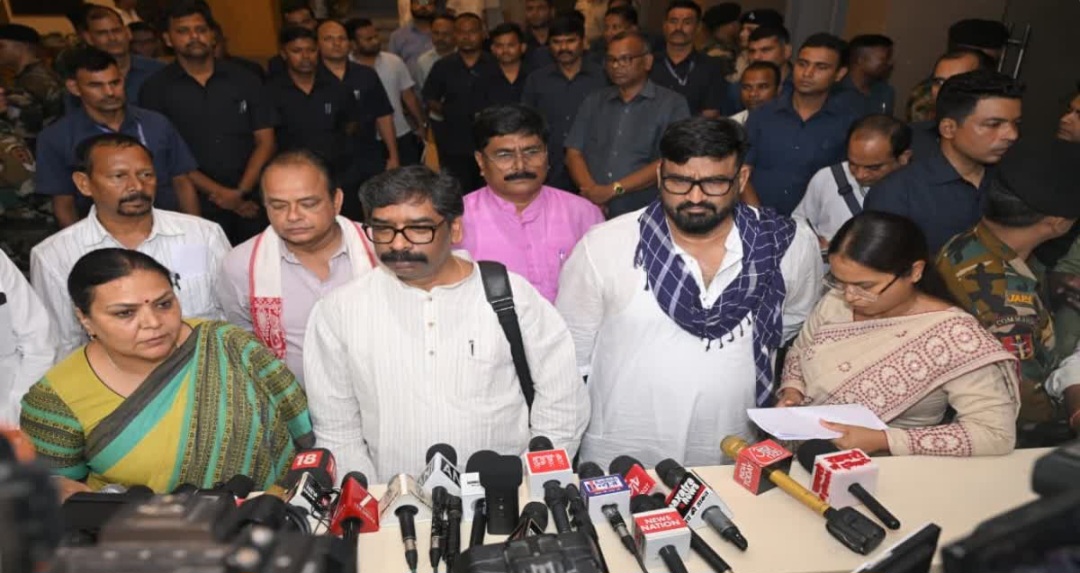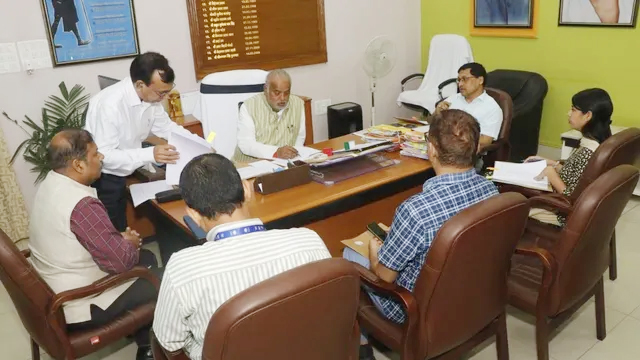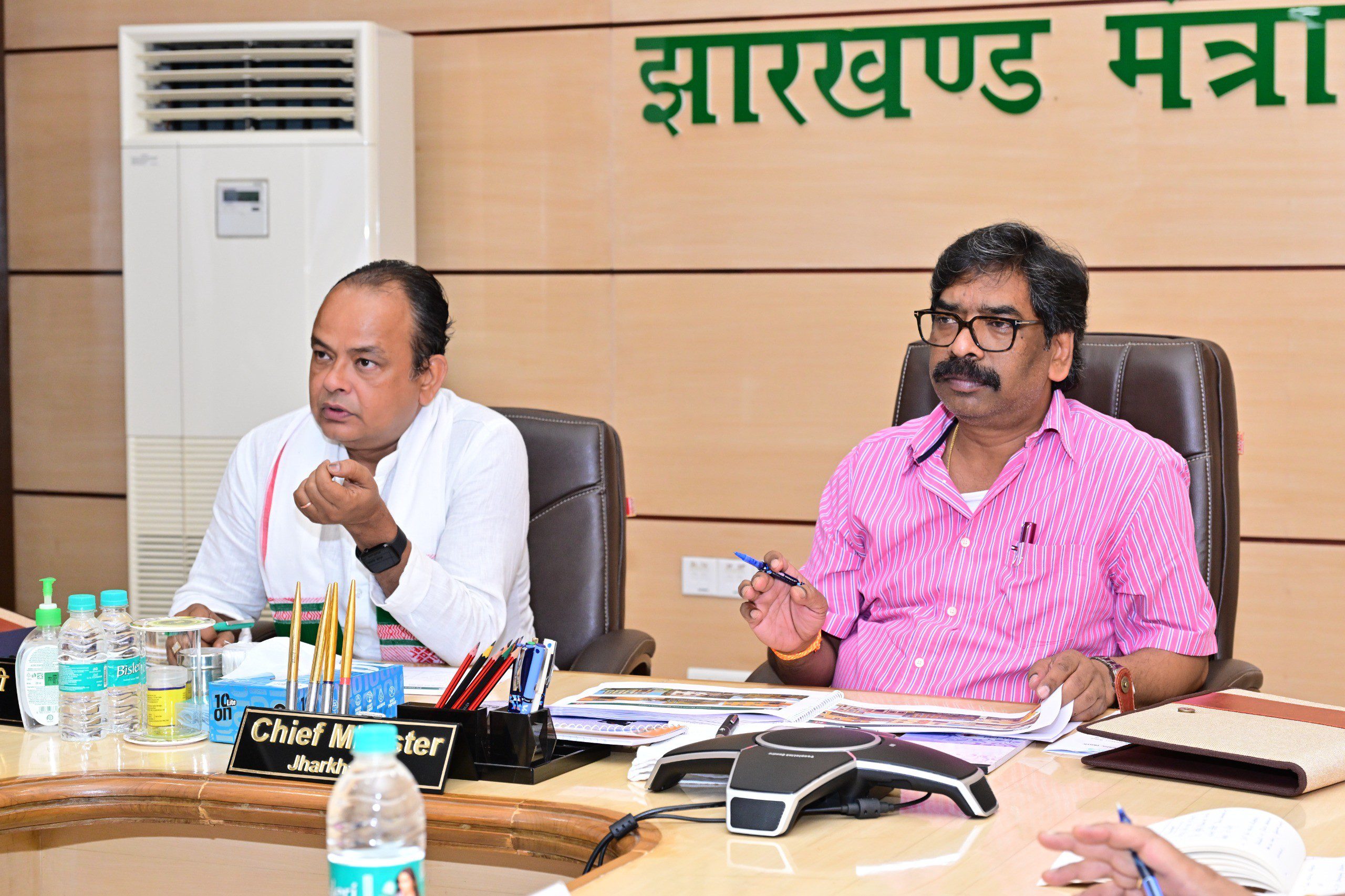
Jharkhand News : Jharkhand Chief Minister Hemant Soren on Tuesday conducted a high-level review meeting of the Health, Medical Education and Family Welfare Department at the Jharkhand Secretariat. During the meeting, he assessed the progress of healthcare infrastructure, availability of medicines, digital monitoring of health services, and the implementation of various public health schemes across the state.
The Chief Minister emphasized that providing quality, affordable, and accessible healthcare services to every citizen remains the government’s top priority. He directed officials to ensure visible improvements in treatment facilities, medicine availability, and emergency healthcare services in government hospitals.
AI Control Room for Ambulance Monitoring
Expressing dissatisfaction over the current ambulance services in the state, the Chief Minister directed officials to establish an AI-based control room for real-time monitoring of ambulance operations. He said that every minute is crucial during accidents and medical emergencies, making it imperative to strengthen and expedite ambulance services.
Study Uber-Like Model for Emergency Transportation
To improve emergency patient transportation, the Chief Minister instructed officials to study and evaluate ride-hailing models similar to Uber and Ola. He asked the department to prepare and submit a detailed action plan within a week for implementing a similar concept in the state’s healthcare system.
Fast-Track Recruitment of ANMs and GNMs
The Chief Minister directed officials to accelerate the recruitment process for vacant positions of Auxiliary Nurse Midwives (ANMs) and General Nursing and Midwifery (GNM) personnel. He stressed that a shortage of healthcare workers should not affect patient care and also called for the speedy appointment of specialist doctors and other medical professionals.
Separate Health Strategies for Urban and Rural Areas
Highlighting the differing healthcare challenges in urban and rural regions, the Chief Minister instructed the department to prepare separate action plans for both areas. He also called for healthcare facilities to be designed according to Jharkhand’s geographical conditions and directed officials to create dedicated emergency response systems for diseases such as cancer, heart attacks, strokes, and diabetes.
Expansion of Medical College Seats
Reviewing the state’s medical education infrastructure, the Chief Minister directed officials to increase undergraduate (UG) and postgraduate (PG) seats in medical colleges. He also emphasized strengthening treatment facilities for paralysis and stroke patients.
The progress of under-construction government medical colleges in districts including Koderma, Bokaro, Chaibasa, Dumka, Jamshedpur, and Hazaribagh was also reviewed, with instructions to expedite construction and ensure timely completion.
‘Abua Dawakhana’ to be Launched
The state government plans to establish Mukhyamantri Abua Dawakhana, an integrated medicine distribution center to be operated through Ayushman Arogya Mandirs. The initiative will provide essential medicines from allopathy, Ayurveda, homeopathy, Unani, and Siddha systems free of cost under one roof, particularly benefiting rural residents.
Focus on Organ Donation Awareness
The Chief Minister directed officials to launch awareness campaigns promoting organ donation, including kidney, liver, and cornea donations. He also instructed medical colleges to organize workshops and invite renowned specialists from across the country as guest faculty to enhance the knowledge and skills of medical professionals.
Virtual Review of Jamtara Health Sub-Centre
Through a virtual interaction, the Chief Minister connected with a Health Sub-Centre in Aam Dumaria, Jamtara district, to review healthcare services on the ground. He sought information on the availability of doctors, ANMs, GNMs, patient footfall, maternal healthcare services, and institutional deliveries. He directed officials to ensure all facilities required for safe childbirth are fully functional.
Key Directives Issued by the Chief Minister
- Immediate recruitment of ANMs, GNMs, specialist doctors, and other medical staff.
- Establishment of AI-based call centers and Uber-style ambulance services.
- Audit of the state’s referral healthcare system.
- Restructuring of health department directorates.
- Enhanced cleanliness and maintenance of hospitals.
- Statewide eye-check-up camps.
- Intensive campaign for ABHA card enrollment in schools, colleges, and Anganwadi centers.
- Adoption of the latest medical technologies to improve healthcare delivery.
- Upgradation of district hospitals under the Chief Minister Hospital Kayakalp Scheme.
- Establishment of blood separation units and modernization of blood bank services through app-based systems.
- Audit of hospitals empaneled under the Ayushman Bharat scheme.
- Setting up rehabilitation and therapy centers in all medical colleges.
- Timely completion of under-construction medical colleges.
- Early operationalization of Abua Dawakhana.
- Engagement of eminent doctors from across India as guest faculty in medical colleges.
- Promotion of organ donation programs on the lines of the Kerala model.
The Chief Minister reiterated that strengthening healthcare infrastructure and ensuring efficient delivery of medical services across Jharkhand remain among the government’s highest priorities.