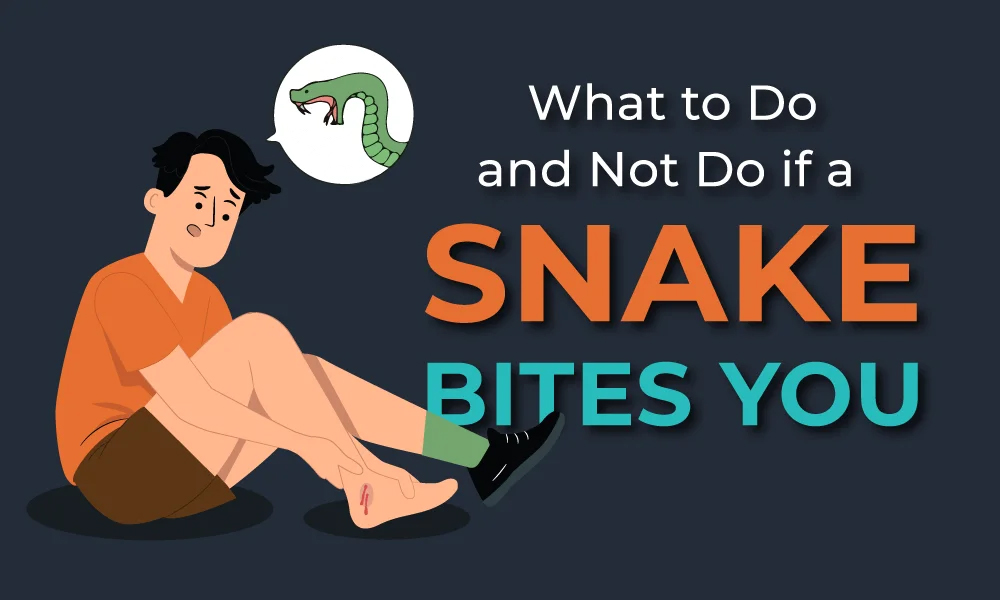
London: A snakebite can be a terrifying experience for anyone. Especially in the case of a venomous snakebite, panic often leads people to make mistakes that can make the situation even more critical. According to experts, the most important steps after a snakebite are to remain calm, minimize physical movement, and reach a hospital without delay. Timely medical treatment can save lives.
If you encounter a snake, maintain a safe distance and slowly back away. Do not attempt to catch, kill, or provoke it. Furthermore, if a snake bites you, do not run or walk briskly; increased physical activity can accelerate the spread of venom throughout the body. Therefore, it is essential to keep the victim as calm as possible while seeking immediate medical assistance.
What should you do first in the event of a snakebite?
After a snakebite, help the victim sit or lie down in a safe place. Avoid moving the affected limb and keep it as still as possible. If the victim is wearing rings, a watch, a bracelet, or tight clothing near the bite site, remove them before swelling sets in. Then, without wasting any time, head to the nearest hospital or call for an ambulance.
Symptoms following a snakebite may include pain, swelling, vomiting, dizziness, weakness, and difficulty breathing. However, there may be no obvious symptoms initially. Therefore, it is crucial to seek a medical evaluation without waiting for symptoms to appear.
Exercise caution when applying a bandage
Keeping the affected area still after a snakebite is vital. In certain specific situations, trained healthcare professionals may use a “pressure immobilization” technique, which involves applying a bandage with appropriate pressure. However, this technique is not suitable for every type of snakebite. Applying a bandage incorrectly or too tightly can cause harm. Therefore, do not apply a pressure bandage without medical instruction.
Crucial mistakes to avoid in the event of a snakebite

According to experts, certain home remedies used after a snakebite can worsen the situation. Therefore, the following mistakes must be avoided:
– Do not attempt to drain blood by cutting the wound with a knife or blade.
– Never try to suck the venom out with your mouth.
– Do not apply ice or heat to the bite site.
– Avoid binding the wound tightly or applying a tourniquet.
– Do not give the victim alcohol, coffee, or other stimulant beverages.
– Do not administer medications like aspirin or ibuprofen without a doctor’s advice.
– Do not pursue the snake in an attempt to catch or kill it.
Reaching the hospital in time is of the utmost importance.
A snakebite may require the administration of antivenom. A doctor will determine the need for this based on the patient’s condition and…