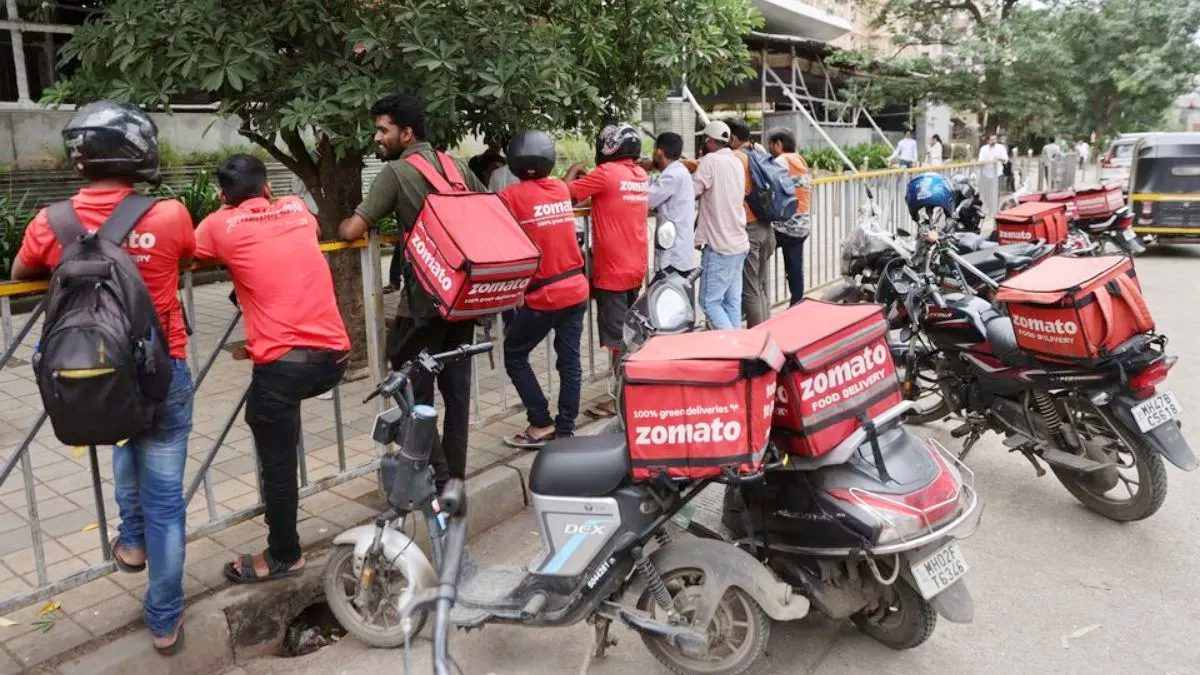
Jharkhand News : Gig workers in Jharkhand have received major relief as the Governor, Santosh Kumar Gangwar, has approved the Jharkhand Platform-Based Gig Workers (Registration and Welfare) Bill, 2025. With the enactment of this law, gig workers associated with online platforms will now be entitled to minimum wages and social security benefits.
Under the new law, gig workers will receive minimum wages calculated on the basis of distance covered and time spent on each task. In addition, they will be provided accident insurance, health insurance, emergency medical assistance, maternity benefits, and other health-related support. The Jharkhand government had passed the bill during the monsoon session of the Assembly and sent it to the Governor for approval.
As per the provisions, all aggregators must register themselves on the e-Shram portal and onboard their gig workers. To safeguard workers’ rights and ensure delivery of welfare schemes, a Platform-Based Gig Workers Welfare Board will be constituted.
Aggregators violating the rules will face a fine of ₹50,000. If the violation continues even after conviction, an additional penalty of ₹5,000 per day will be imposed until compliance. In serious cases, company directors, managers, secretaries, or other responsible officials may face legal action.

After registration, gig workers will be issued a special identification ID and will have the right to work in a safe and secure environment. They can seek guidance from the Welfare Board regarding work conditions and related parameters. Aggregators will be required to make payments to workers at least on a weekly basis. A dedicated grievance redressal mechanism will also be set up.
The state government will establish the Jharkhand Platform-Based Gig Workers Social Security and Welfare Fund for registered workers. The fund will receive contributions from aggregators, government grants, and other sources. Aggregators will contribute between one to two percent of their annual turnover earned in the state, and the cost will not be passed on directly or indirectly to consumers or gig workers.