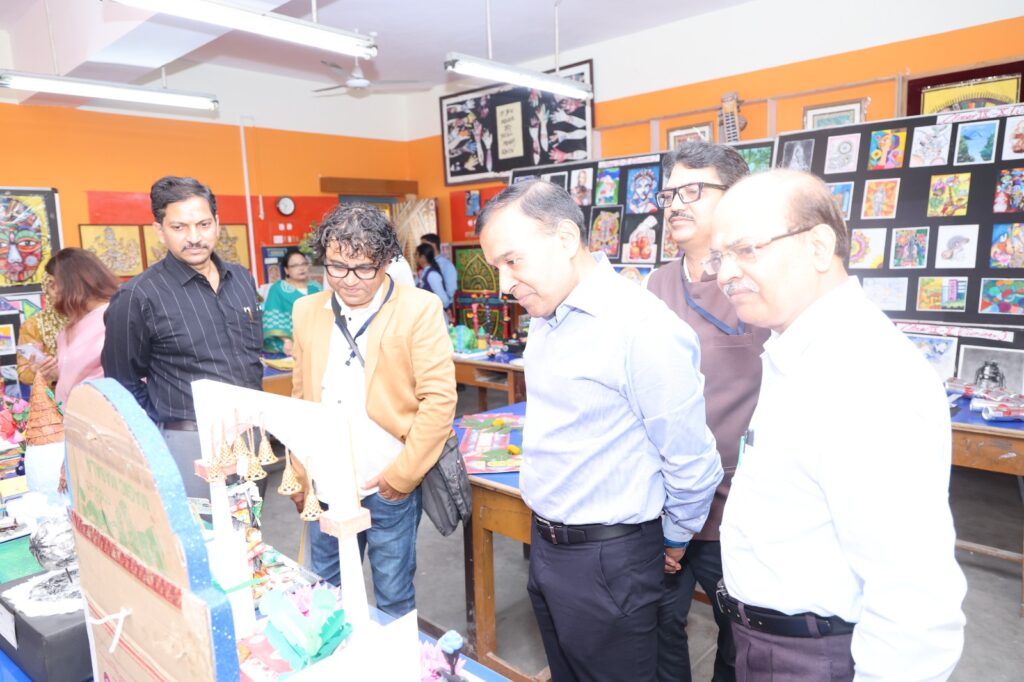
Ranchi: Jawahar Vidya Mandir (JVM), Shyamali, organised its academic exhibition “Abhigyan 2026”, celebrating knowledge, curiosity, scientific thinking and creativity. The event aimed to move beyond rote learning and textbook-based education by encouraging students to develop practical understanding, critical thinking, analytical abilities and a scientific outlook.
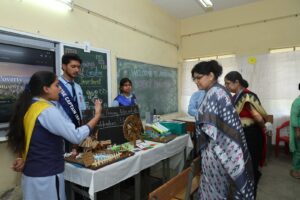
Held at the school’s Dayanand Auditorium and across its campus, the programme provided a platform for students to showcase their hidden talents, strengthen teamwork and develop conceptual clarity. More than 2,000 students presented over 800 models and projects across multiple subjects, turning the school into a showcase of interdisciplinary learning and innovation.
Grand Inauguration at Dayanand Auditorium
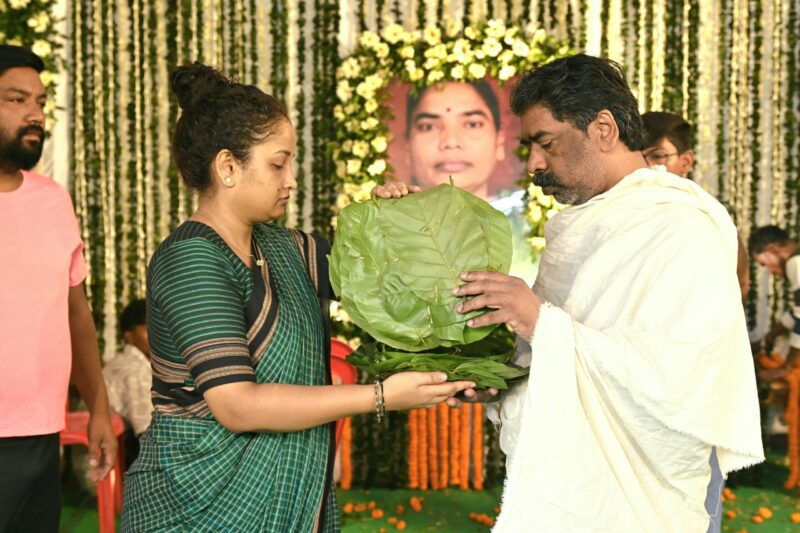
The programme began at 8:30 am with a series of cultural performances celebrating Jharkhand’s traditions. Guests were welcomed with traditional tilak ceremonies and folk music before the chief guest inaugurated the event by lighting the ceremonial lamp.
Manoj Kumar, Secretary of the Rural Development Department, Government of Jharkhand, attended as the chief guest. The special guests included Abhay Kumar, member of the School Management Committee, and Isleen Kaur, manager of Union Bank of India.
Other prominent attendees included school Principal B.N. Jha, Dean of Student Welfare L.N. Patnaik, Programme Coordinator Sushmita Mishra, section in-charge Aminder Kaur Saluja, Shileshwar Jha ‘Sushil’, Deepak Sinha and Mamta Das. Distinguished guests from Ranchi and jury members representing various universities were also present.
Guests and jury members were welcomed with traditional stoles, bouquets and mementoes.
Kathak Performance and Drug-Free Awareness Skit
Students presented a series of cultural performances that added colour to the inaugural programme.
A captivating Kathak dance performance, a welcome song carrying the message “Manasa Satatam Smaraniyam, Lokahitam Mama Karaniyam”, and an energetic street play on drug-free awareness won appreciation from the audience.
Following the performances, the chief guest formally announced the inauguration of Abhigyan 2026 amid applause.
More Than 800 Models Showcase Student Innovation
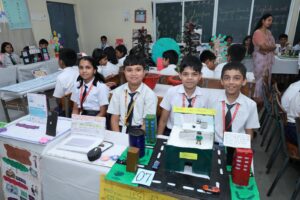
The exhibition featured projects across science, mathematics, languages, social sciences, economics, political science, computer science and the arts. Students explained their models with confidence, demonstrating their understanding of concepts and their ability to connect classroom learning with real-world applications.
Early Classes Explore Seasons, Festivals and Everyday Life
Around 180 students from LKG presented models and displays on the theme “Beauty of Seasons”, exploring the changing seasons.
Another 150 students from UKG highlighted India’s festivals and cultural diversity, presenting life as a celebration of traditions and togetherness.
Students from Classes 1 and 2, numbering 151, displayed 151 models on subjects such as neighbourhoods, food, the animal kingdom and pollution. The projects encouraged younger learners to understand their surroundings and explore ways to improve everyday life.
Primary Section Combines Science, Mathematics and Art
Students from Classes 3 to 5 presented a range of practical and creative projects.
Science exhibits included models on the human eye, a mini vacuum cleaner, “From Soil to Bread”, green energy and “Future Ranchi 2040”.
Mathematics projects such as “Maths in Cricket”, Fraction Pizza and Geometrical Park attracted attention by demonstrating mathematical concepts through familiar and interactive examples.
The primary section also featured around 100 crafts made from waste materials, paintings and live demonstrations of folk art, highlighting the role of creativity and environmental awareness in learning.
Classes 6 to 10 Present Advanced Scientific Models
The secondary section featured several technology-driven and science-based exhibits by students of Classes 6 to 10.
Physics projects included Gravity Battery, Li-Fi technology, Tesla Coil, Magnetic Levitation and a Landslide Alert System.
In chemistry, Edible Water Blob and Food Freshness Indicator models demonstrated practical applications of scientific concepts. Biology exhibits included Digital Patient and Smart Agriculture.
Computer science projects such as “JARVIS and Vision AI” and a Smart Parking System highlighted students’ interest in artificial intelligence, automation and technology-based solutions.
Classes 11 and 12 Explore Emerging Technologies and Global Issues
Senior secondary students presented projects that combined advanced scientific concepts with contemporary economic and geopolitical issues.
Physics exhibits included Laser Photo Phone and Maglev Train. Biology projects explored Plastic-Eating Microbes and Organ-on-a-Chip technology.
In economics, students examined the economic impact of the Iran war and the AI valuation bubble. Political science projects addressed subjects such as the South China Sea and space colonisation.

These exhibits encouraged students to examine complex issues, analyse different perspectives and develop a broader understanding of the world.
Principal B.N. Jha Highlights Practical Learning
In his welcome address, Principal B.N. Jha emphasised that genuine education goes beyond memorising information or reproducing textbook content.
He said that the true value of knowledge lies in the ability to think, understand, question and create something new.
Describing Abhigyan 2026 as a reflection of the intelligence and talent within students, he said the exhibition brought classroom concepts into practical settings while giving students the confidence to demonstrate their creativity and scientific thinking.
He added that such initiatives help students develop the skills needed to understand real-world challenges and explore innovative solutions.
Chief Guest Manoj Kumar Praises Integrated Learning
Chief guest Manoj Kumar, Secretary of the Rural Development Department, Government of Jharkhand, expressed his appreciation for the school and its students, recalling his own connection with the institution.
He said he had passed his Class 12 examinations from the same campus in 1995, describing the school as much more than an educational institution in his life.
He observed that education should not be limited to obtaining a degree but should also teach students how to understand and navigate life.
Praising the concept of integrated learning, Kumar said that knowledge of a single subject was not sufficient in today’s complex world. Exhibitions such as Abhigyan encourage students to develop broader conceptual understanding and critical-thinking abilities, helping them move beyond textbook learning.
He also praised the integration of science, art, languages, mathematics and social sciences, noting that students were developing the qualities of scientists, thinkers and future nation-builders through such activities.
Jury Members Assess Projects and Encourage Students
Students were the central attraction of the event, with participants ranging from the youngest learners to Class 12 students explaining their projects with enthusiasm and confidence.
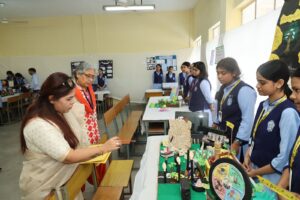
Jury members visited individual rooms and examined the models in detail. They asked students analytical questions to assess their conceptual understanding, reasoning and clarity of thought.
The evaluators appreciated the students’ preparation and dedication while providing suggestions to help them improve their projects and develop their ideas further.
Parents, teachers and other visitors filled the auditorium and exhibition rooms throughout the programme. Their encouragement and applause boosted the confidence of the participants.
Around 50 students from Nirmala College, Ranchi, along with students from other schools, also visited the exhibition and explored the projects on display.
Blood Donation Camp Adds a Social Welfare Dimension
Alongside the academic exhibition, the JVM Alumni Association organised a large blood donation camp in the school’s visitors’ room.
Held from 10 am to 2 pm, the camp encouraged former students, teachers and visitors to donate blood under the messages “A Small Act Can Make a Big Difference” and “Give Blood, Give Hope, Save Lives.”
The initiative extended the spirit of learning and community participation beyond the classroom, highlighting the importance of compassion, humanitarian service and social responsibility.
Abhigyan 2026 Leaves a Lasting Impression
The event brought together student innovation, teacher participation, expert evaluation and strong support from parents and visitors.
From scientific experiments and technology-driven models to cultural performances, artistic displays and the blood donation camp, Abhigyan 2026 reflected the school’s emphasis on all-round development.
The exhibition demonstrated how students can learn through exploration, collaboration and practical experience. It also reinforced the importance of encouraging curiosity, independent thinking and creativity as essential parts of education.