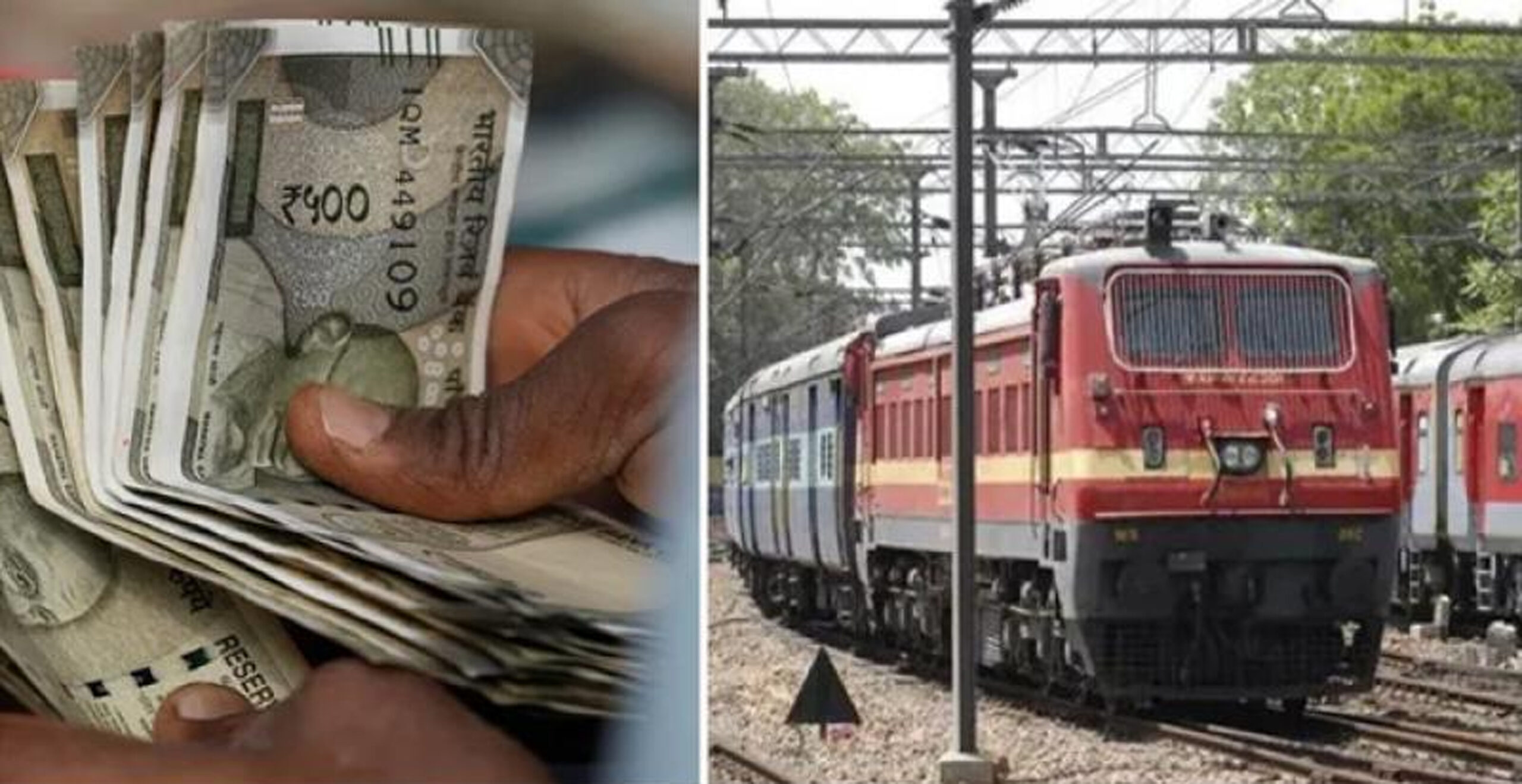
New Delhi : Millions of Indian Railways employees are awaiting a decision on their annual festival bonus, with the Union Cabinet expected to consider the Productivity Linked Bonus (PLB) for the financial year 2025–26. According to media reports, the proposal may come up for consideration on Wednesday, October 14. However, the bonus for FY2025–26 should not be treated as approved until an official government announcement is issued. The annual bonus is generally paid to eligible non-gazetted railway employees before the Durga Puja and Dussehra holidays. Employee representatives are also demanding changes to the calculation formula, arguing that the existing wage ceiling does not reflect current pay levels.
What Was the Bonus Announced Last Year?
In September 2025, the Union Cabinet approved a 78-day Productivity Linked Bonus worth ₹1,865.68 crore for 10,91,146 railway employees for the financial year 2024–25.
Under that approval, the maximum bonus payable to an eligible employee was ₹17,951. The amount was calculated using a monthly wage ceiling of ₹7,000. The payment covered eligible non-gazetted employees across several categories of railway staff.
The approval in September 2025 applied to FY2024–25. The bonus for FY2025–26 is a separate decision and awaits official confirmation.
Why Railway Employees Want a Higher Bonus
The Indian Railways Technical Supervisors’ Association (IRTSA) has asked the government to revise the wage ceiling used to calculate the PLB.
In a memorandum submitted to Finance Minister Nirmala Sitharaman and Railway Minister Ashwini Vaishnaw, the association argued that the ₹7,000 monthly ceiling has remained unchanged since 2016 and no longer reflects current pay levels and increases in dearness allowance.
IRTSA has called for the ceiling for Level-1 employees to be raised to ₹18,000 plus dearness allowance (DA). It has also sought a proportionate increase for employees in Pay Level 2 and above.
The association argues that revising the ceiling would bring the bonus calculation more closely in line with the existing pay structure under the Seventh Central Pay Commission.
How Much Bonus Could Employees Get?
Under the existing formula, the maximum PLB for 78 days is ₹17,951, based on the prescribed monthly wage ceiling of ₹7,000.
According to the calculation cited in the supplied report, using ₹18,000 as the monthly wage base would produce an estimated bonus of approximately ₹46,184 for 78 days.

However, this is an illustrative calculation based on the proposed wage base, not an approved payment amount. IRTSA’s actual demand includes ₹18,000 plus DA, and the final payout would depend on the formula and ceiling approved by the government.
Until the Cabinet announces its decision, employees should not assume that the higher amount will be paid.
Which Railway Employees Are Eligible for PLB?
The Productivity Linked Bonus generally covers eligible non-gazetted railway employees in various categories, including:
• Track maintainers
• Loco pilots
• Train managers (guards)
• Station masters
• Supervisors and technicians
• Technician helpers and pointsmen
• Ministerial staff and other eligible Group C employees
Eligibility and the final payable amount are determined under the applicable government and Railway Board rules.
Railway Board Warns Against Fake Bonus Letters
Employees should also exercise caution regarding bonus announcements circulating on social media.
The Railway Board recently clarified that a widely circulated letter claiming a ₹41,000 bonus for FY2025–26 was fake and had not been officially issued. The clarification does not itself determine whether a genuine bonus will be approved; employees should rely on official Railway Board and Ministry of Railways announcements.
Cabinet Decision Awaited
The expected Cabinet consideration has raised hopes among railway employees ahead of the festive season. While last year’s bonus covered more than 10.9 lakh employees, both the approval and the amount for FY2025–26 remain subject to the government’s decision.
The proposed revision of the wage ceiling is a separate demand and should not be confused with approval of the annual PLB itself.