More News : Scientists have recorded an unusual event in which the Earth took slightly longer than usual to complete its rotation on its axis. The delay was measured at approximately 1.45 milliseconds—a minute but scientifically significant change. Normally, a solar day is exactly 24 hours, or 86,400 seconds, but on this particular day, the duration increased to 86,400.00145 seconds. Advanced measurement systems detected and verified the change with extreme accuracy.
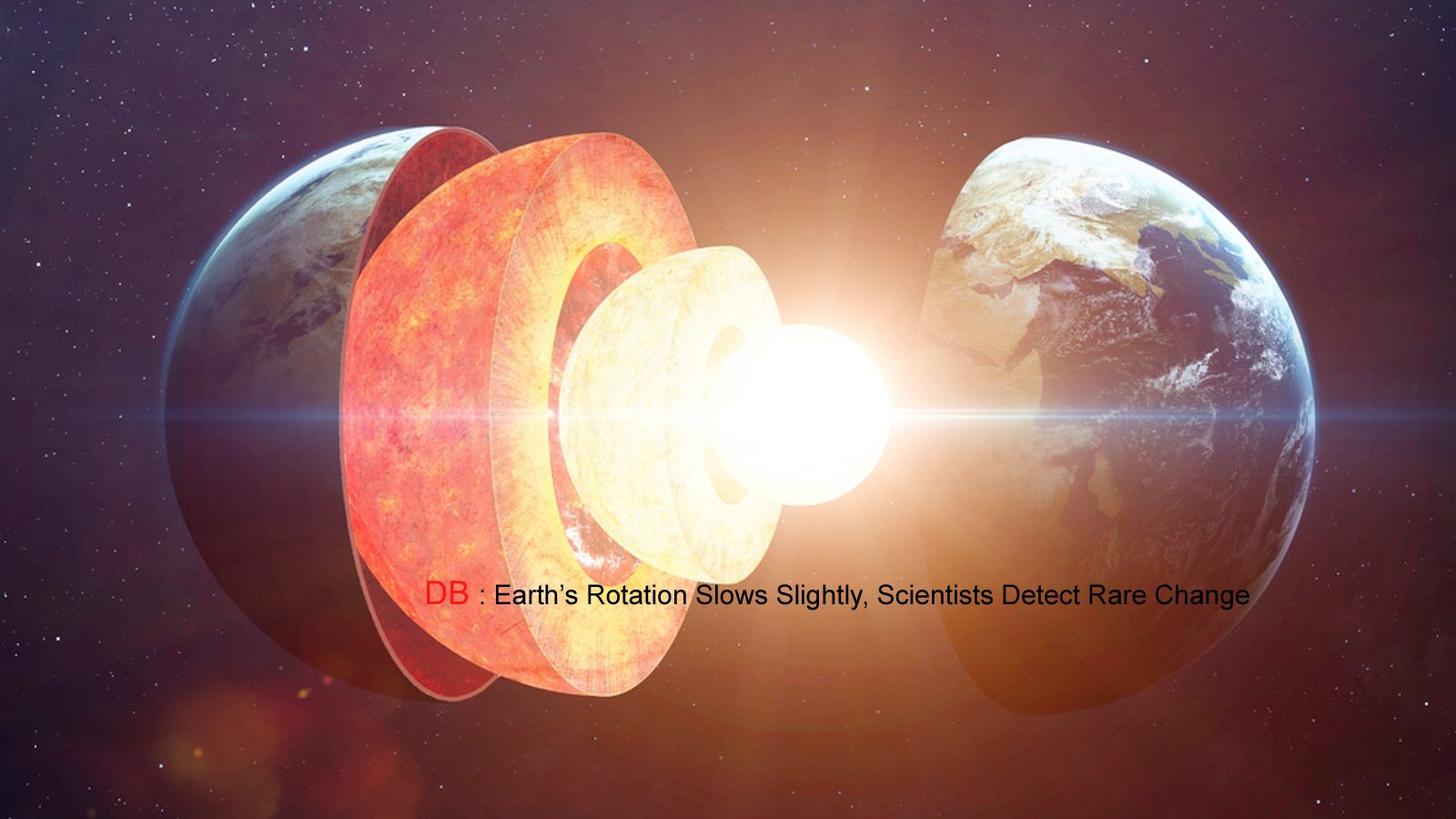
Earth’s rotation speed is not constant; it fluctuates due to multiple natural factors. Variations in atmospheric wind patterns, the flow of ocean currents, and dynamic movement within the Earth’s molten metallic core are among the primary reasons. Additionally, the Moon’s gravitational pull generates ocean tides that gradually slow Earth’s rotation over time.
On August 5, the Southern Hemisphere experienced unusual weather conditions. Strong winds in certain regions created a measurable impact on the planet’s surface, leading to a momentary slowing of its rotation. This resulted in the tiny increase in the day’s length. Lunar tidal forces and shifting patterns within the Earth’s molten core also played a role by altering the distribution of the planet’s mass—causing small variations in its spin speed.
Scientists monitor these changes closely because even millisecond-level variations in Earth’s rotation can have significant implications for modern technology. Critical systems such as GPS navigation, satellite communications, and space missions depend on extremely precise time measurements. A shift as small as a few milliseconds, if ignored, could cause errors in these systems.
To ensure accuracy, international standard time is adjusted periodically to account for such natural fluctuations. This is done through mechanisms such as leap seconds, which synchronize atomic time with the Earth’s rotational time.

While this particular change poses no danger to the public, scientists emphasize that it should not be dismissed. Such variations occur naturally from time to time, but they can also serve as early indicators of more significant changes within Earth’s internal or external environment. Studying these patterns allows researchers to better understand Earth’s long-term rotational stability and its interaction with climatic, oceanic, and astronomical forces.
For now, experts agree that the August 5 delay is a reminder of the delicate balance that keeps Earth’s rotation stable—and how even the most subtle changes can ripple through the high-tech systems that govern our daily lives.