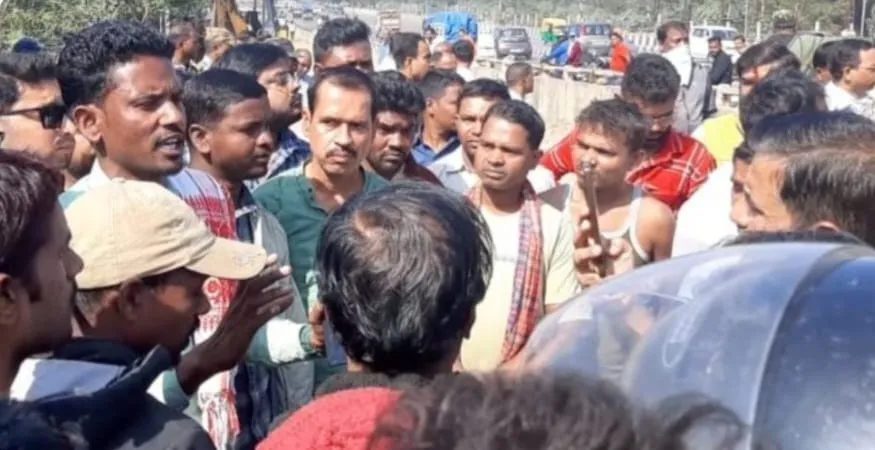
Jharkhand News : In a sudden move, the Straight Bar Mill (formerly Usha Martin), a unit of Tata Steel, located in the Adityapur Industrial Area, was shut down with effect from Wednesday, December 31. The abrupt closure has rendered nearly 700 workers jobless, triggering strong protests at the factory gate.
Workers reached the plant for their morning duty only to be informed that operations had been stopped. Angered by the sudden decision, they staged a demonstration at the main gate, accusing the management of shutting down the mill without any prior notice. Many workers claimed they had been employed at the plant since 1999 and had dedicated their entire working lives to the unit. They questioned how they would find new jobs at this stage of their careers.
The protesting workers also alleged that their pending wages and other dues had not been cleared before the closure. They recalled that when Tata Steel acquired the Usha Martin plant, assurances were given that the unit would continue operations and no employee would lose their job.
At present, the plant was being operated through vendor company RK Enterprises, under which around 165 workers were employed. Including workers engaged through other contractors, more than 600 workers have now become unemployed following the shutdown.
The workers placed three major demands before the management: resumption of plant operations, adjustment of workers in other companies at the same pay scale if the closure is permanent, and immediate payment of wages, gratuity, and other benefits due to all workers up to December 31.

Vendor Ready to Pay Its Workers’ Dues
Responding to the issue, Rajesh Kumar, proprietor of RK Enterprises, stated that he is ready to clear the pending dues of workers employed under his company over the past year. However, he clarified that he is not responsible for the payment of dues of workers who were employed earlier. He added that with the closure of the plant, the vendor contract also ended on December 31.
The sudden shutdown has raised serious concerns over job security and workers’ rights in the industrial belt, with affected families now facing an uncertain future.