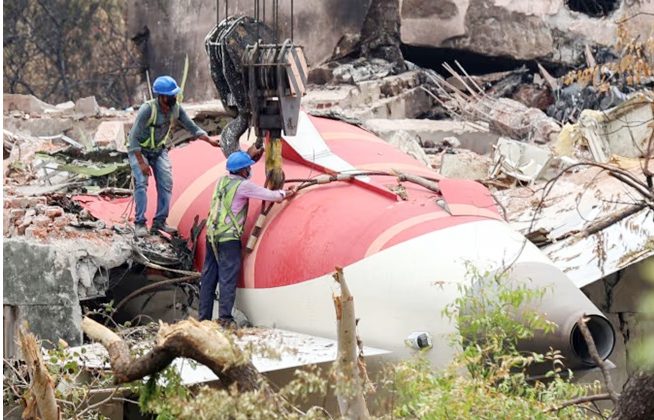
India News : A shocking new development has emerged in the investigation into last month’s tragic Air India flight AI-171 crash in Ahmedabad. According to a special report published by The Wall Street Journal, cockpit voice recordings from the aircraft’s black box suggest that the aircraft’s senior pilot may have intentionally shut off fuel flow to both engines moments after takeoff.
Swadesh Kumar Singh Re-Elected as President of RSM Uttar Pradesh
The June 12 crash, which occurred just 32 seconds after takeoff, killed all 260 people on board and has since raised serious concerns about cockpit conduct and flight safety protocols. American officials familiar with the investigation have reportedly confirmed that the captain manually turned the fuel control switches—essential components regulating engine operation—into the “cutoff” position, disabling both engines mid-air.
The information, widely circulated by global media outlets, is based on voice recordings between the two pilots in the cockpit. The first officer, who was operating the flight, was heard asking the senior captain why the switches were set to “cutoff” after they had already departed from the runway.
The pilots involved were Captain Sumeet Sabharwal, with over 15,600 flying hours, and First Officer Clive Kundar, who had over 3,400 hours of flight experience. The shocking exchange captured in the black box has become a crucial piece of evidence in the ongoing investigation led by India’s Aircraft Accident Investigation Bureau (AAIB).
The AAIB’s preliminary report, released last week, had already pointed to a confused cockpit environment and raised doubts about the position of the engine fuel cutoff switches just before the crash. This latest revelation places further scrutiny on human error as a possible cause behind the fatal incident.

As of now, Air India, the Directorate General of Civil Aviation (DGCA), and Boeing have not responded to media queries regarding this latest claim.
The crash, involving a Boeing 787 Dreamliner, is one of the deadliest in India’s aviation history and has triggered widespread concern over pilot training, in-flight decision-making, and safety systems.
With pressure mounting, the aviation community and families of the victims await further clarity and accountability as investigations continue into what truly went wrong on that tragic morning in Ahmedabad.