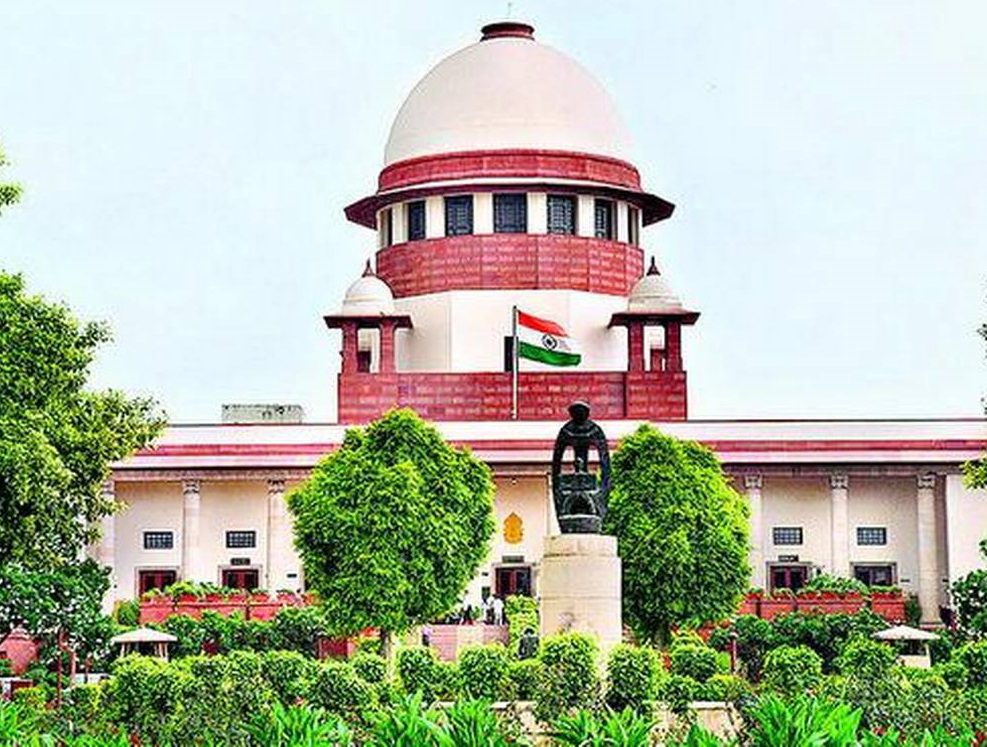
India News : The Supreme Court on Thursday expressed deep concern over the condition of a 31-year-old man who has been in a vegetative state for nearly 12 years, observing that he cannot be left to continue in such a condition. The remarks came while hearing a petition filed by the man’s father seeking permission to withdraw life-sustaining treatment and allow his son to die naturally.
A bench comprising Justice J.B. Pardiwala and Justice K.V. Viswanathan described the medical report submitted by AIIMS as “extremely tragic.” After reviewing the findings of the AIIMS secondary medical board, the court said the case was deeply distressing and warranted a humane approach. However, before passing any final order, the bench said it would like to personally meet the parents of the patient. The meeting has been scheduled for January 13 at 3 pm.
The patient, Harish Rana, suffered a severe fall from the fourth floor of a building in 2013. Since then, he has remained in a persistent vegetative state. While his eyes remain open, he shows no signs of awareness or conscious response. Doctors have clarified that this condition is different from a coma and offers little chance of recovery.
The petition has been filed by the patient’s father, Ashok Rana, who has approached the Supreme Court seeking judicial intervention to withdraw life support so that his son may be allowed to pass away naturally. Earlier, on November 26, the apex court had directed the district hospital in Noida to constitute a medical board to assess the patient’s condition.
The Noida district hospital medical board, after examination, reported that the chances of recovery were extremely low. On December 11, the Supreme Court noted that the primary medical board’s report painted a grim picture. The patient was found bedridden, dependent on a tracheostomy tube for breathing and a gastrostomy tube for feeding. Photographs showed severe bedsores, and doctors unanimously opined that recovery was highly unlikely.
Subsequently, the court directed AIIMS to form a medical board and submit a detailed report. After receiving the AIIMS report, the Supreme Court reiterated that the case was heartbreaking and emphasized the need to hear directly from the parents before taking a final call.
The court has also noted that the patient is suffering from 100 percent disability due to quadriplegia and has remained in a vegetative state for over a decade. Justice Pardiwala earlier observed that the patient’s condition appeared to be deteriorating steadily and that there was no doubt about the severity and permanence of his condition.
Notably, this is the second time the father has approached the Supreme Court seeking permission for passive euthanasia. On November 8 last year, the apex court had declined the request in view of a report submitted by the central government, which stated that the patient would be cared for at home with assistance from the Uttar Pradesh government, including regular visits by doctors and a physiotherapist.