India News : The National Council of Educational Research and Training (NCERT) has once again sparked controversy with its latest curriculum changes. A new NCERT textbook reportedly blames Jawaharlal Nehru, Muhammad Ali Jinnah, and Lord Mountbatten for the partition of India, drawing strong criticism from the Congress party.
The chapter titled “Vibhajan ke Doshi” (Those Responsible for Partition) claims that Jinnah’s insistence on the creation of Pakistan, Congress’s acceptance of partition, and Mountbatten’s execution of the process led to the division of the country. The book also emphasizes that the pain of partition cannot be forgotten.
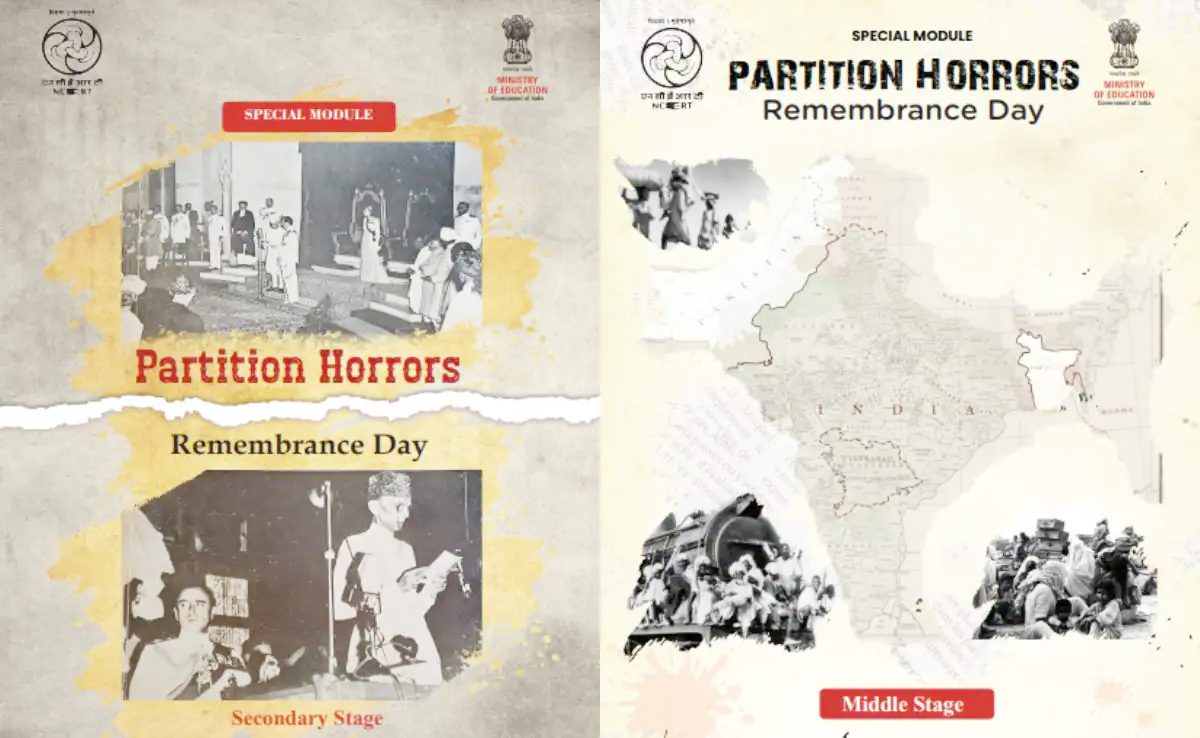
The updated content is part of two new modules introduced by NCERT — one for classes 6 to 8 and another for classes 9 to 12. The new content, available on NCERT’s official website, will soon be printed and distributed to schools across the country. For middle school students (classes 6–8), the content will be included in Social Science textbooks.
Key Content Highlights
-
The textbook features images of Nehru, Jinnah, and Mountbatten, placing collective responsibility for partition on them.
-
It states that Congress “yielded” to Jinnah’s demand for a separate nation and accepted partition.
-
Mountbatten is mentioned as the executor of the partition plan.

-
The book quotes India’s first Prime Minister Nehru, stating: “We must either accept partition or face violence and conflict.”
-
A quote from Prime Minister Narendra Modi is also included, noting: “The pain of partition can never be forgotten. Many of our brothers and sisters were displaced from their homes.”

This revision has ignited a political debate, with Congress leaders accusing NCERT of rewriting history with a political agenda. Critics argue that blaming Nehru for partition oversimplifies a complex historical event and misguides students about the nuanced socio-political circumstances of that time.
Meanwhile, supporters of the change argue that historical narratives should evolve and that it’s important for students to be exposed to alternate perspectives.