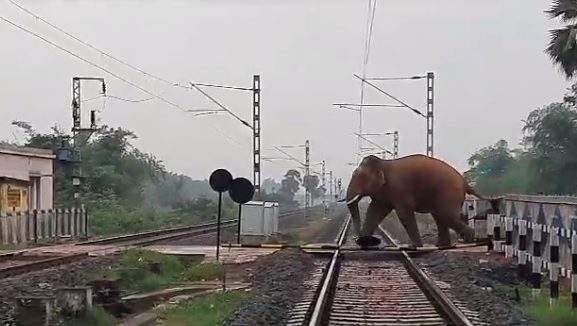
India News : In a major decision aimed at protecting wildlife, the railway line passing through the core area of the Palamu Tiger Reserve will be diverted. The move is intended to safeguard critical corridors used by tigers and elephants. After years of debate, the proposal to construct a third railway line has been rejected, and approval has been granted to shift the existing tracks خارج the reserve’s core zone.
The third rail line project from Son Nagar to Patratu under Indian Railways had progressed in several sections, but the core area of the reserve remained a major obstacle. This region is a vital passage for wildlife, and any construction activity posed significant ecological risks.
The issue dates back to 2021, when the railway development corporation sought a No Objection Certificate (NOC) from the reserve authorities for laying the third line. However, the proposal was rejected due to environmental concerns, and a recommendation was made to divert the track instead. The matter was later taken up by the state wildlife board and eventually reviewed by the National Board for Wildlife in 2023.
After detailed deliberations, the board rejected the third line proposal, stating that new construction within the core area would be harmful to wildlife. Instead, it directed authorities to relocate the existing railway lines outside the reserve.
Under the revised plan, an approximately 11-kilometer stretch of railway track between Chhipadohar and Hehegara stations in Latehar district will be diverted and extended to around 14 kilometers. The new alignment will pass through Ked village and mostly lie outside the reserve boundary. A small portion will still pass through the reserve, where a tunnel will be constructed to ensure safe wildlife movement.

A joint survey by railway authorities and reserve management has been completed, and the Wildlife Institute of India has conducted an environmental impact assessment. The land acquisition process is currently underway, with active involvement from local authorities and consultations with affected villagers to balance development and community interests.
The relocation proposal has been approved and the Detailed Project Report (DPR) is ready. Construction will begin after completion of forest clearances and land acquisition formalities.