India News : The Aircraft Accident Investigation Bureau (AAIB) has released its preliminary report on the June 12 Air India crash in Ahmedabad, unveiling alarming details about the incident. According to the 15-page report, both engines of the Boeing 787-8 aircraft suddenly shut down within seconds of takeoff, causing the fatal crash that claimed the lives of Captain Sumeet Sabharwal and co-pilot Clive Kundar.
Also Read : PM Modi to Distribute Over 51,000 Appointment Letters in 16th Rozgar Mela
As per the report, the aircraft achieved a maximum indicated airspeed (IAS) of 180 knots at around 8:08 AM. Moments later, both engine fuel cut-off switches changed from ‘RUN’ to ‘CUTOFF’ positions—within a second of each other—cutting off fuel supply to the engines. This led to a rapid drop in the N1 and N2 rotation speeds of both engines.
A key revelation came from the cockpit voice recorder, which captured a chilling exchange between the pilots. Captain Sabharwal reportedly asked, “Why did you shut the fuel to the engines?” To which co-pilot Kundar responded, “I didn’t do anything.” This dialogue has raised suspicions about whether a technical malfunction could be responsible, though no systemic issue with the aircraft or engine manufacturer has been found so far.
The engines then underwent a relight attempt. Engine-1 partially recovered, but Engine-2 failed to regain sufficient thrust. The Auxiliary Power Unit (APU) also activated automatically but couldn’t stabilize the aircraft.
Airport CCTV footage showed that the aircraft’s Ram Air Turbine (RAT), an emergency fan-like device, deployed right after takeoff—usually triggered by electrical failure. This indicates the main power supply was affected due to engine failure.

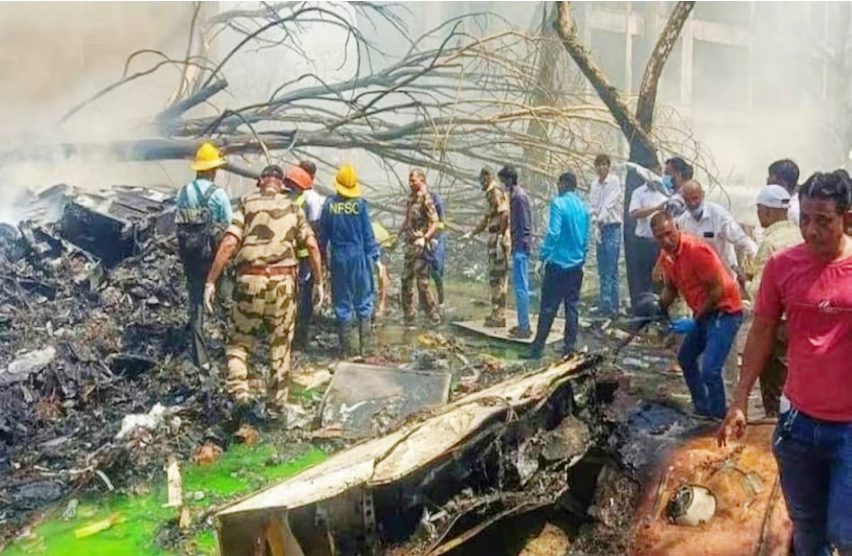
At 8:09:05 AM, a distress call — “Mayday Mayday Mayday” — was sent by the pilot. Air Traffic Control (ATCO) acknowledged the call but received no further response. The aircraft lost altitude quickly and crashed just before crossing the airport perimeter. Emergency services were dispatched at 8:14:44 AM.
Investigations ruled out any bird strike as no evidence was found. Drone footage of the crash site has been recorded, and wreckage has been preserved for further analysis.
The Extended Airframe Flight Recorder (EAFR) was severely damaged and had to be accessed using specialized techniques. Limited fuel samples were collected for lab testing. Eyewitness accounts and the lone survivor’s statement have also been recorded. Post-mortem reports of crew and passengers are under review to cross-analyze with technical findings.
Air India, in an official statement, expressed deep condolences and confirmed full cooperation with AAIB and authorities. The airline accepted the findings of the preliminary report released on July 12, 2025, and will continue to support the investigation.