India News : India has strongly reacted to an attack on a commercial cargo vessel in the Strait of Hormuz, expressing serious concern over the increasing targeting of merchant ships in West Asia and urging that such incidents stop immediately.
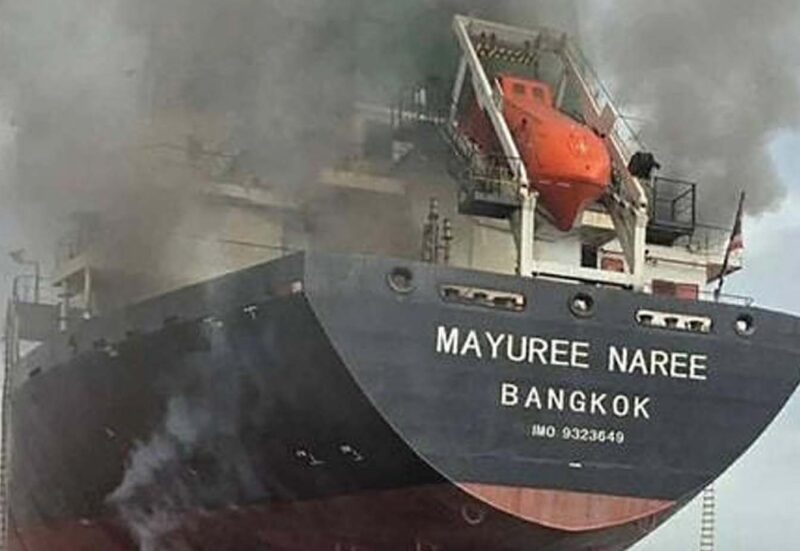
The controversy intensified after reports emerged that a vessel named “Mayuri Nari,” which was heading toward Kandla Port in Gujarat, was attacked by Iran’s Islamic Revolutionary Guard Corps (IRGC).
Statement by India’s External Affairs Ministry
The Ministry of External Affairs issued an official statement condemning the targeting of commercial ships during military conflicts. According to the ministry, the Thailand-flagged vessel Mayuri Nari was attacked on March 11 in the Strait of Hormuz while en route to Kandla.
India emphasized that any disruption to freedom of navigation and trade in international waterways is unacceptable.
Crew Rescued, Some Still Missing
Reports indicate that shells were fired at three vessels in the Strait of Hormuz. The cargo ship Mayuri Nari had departed from Khalifa Port in the United Arab Emirates earlier that morning when it was attacked around 11 a.m.
The Royal Thai Navy carried out a rescue operation, saving 20 crew members and taking them to Oman, while three others remain missing.

Threat to Global Oil Supply
The Strait of Hormuz is considered one of the world’s most critical energy corridors, with about 20% of global crude oil supplies passing through it. Any disruption in this route could significantly affect global oil supply chains and fuel prices.
Safety of Indian Citizens a Priority
India also expressed concern about the safety of civilians caught in the conflict. MEA spokesperson Randhir Jaiswal confirmed that two Indian nationals were killed and one is missing in a recent attack on a vessel.
The government stated that the safety of nearly 10 million Indian expatriates living in the Gulf region remains a top priority. Currently, around 9,000 Indian citizens are in Iran, and the Indian embassy is in constant contact with them.
Indian leaders, including the Prime Minister and External Affairs Minister, are also engaging with counterparts and regional leaders to help stabilize the situation and ensure the safety of international maritime routes.