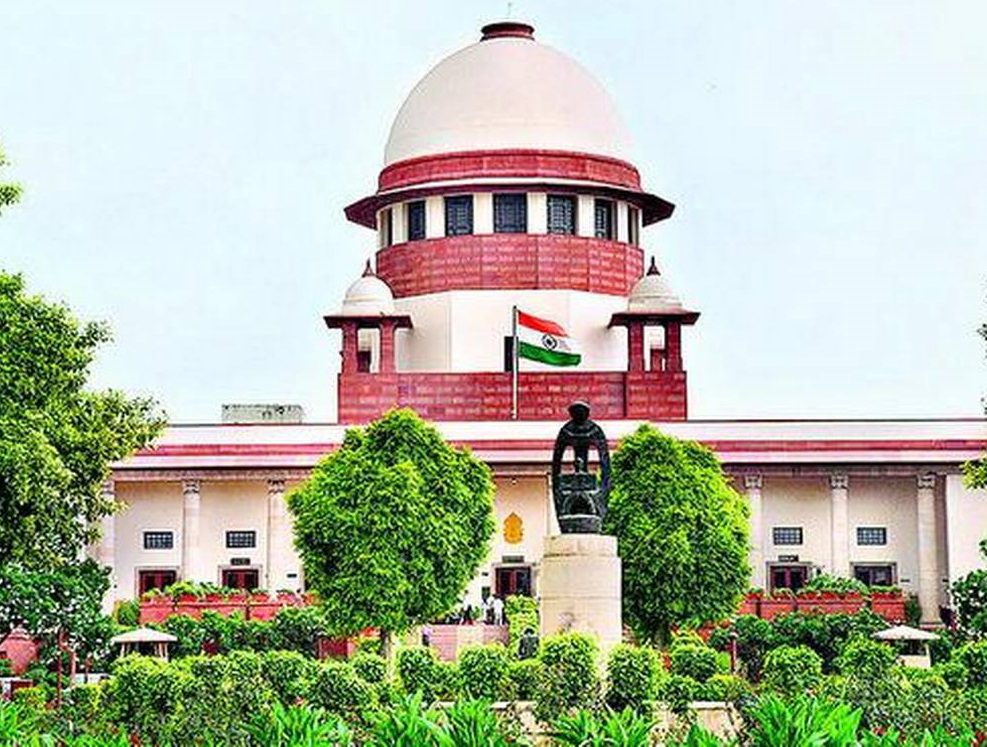
India News : In a significant administrative move, the Supreme Court of India has introduced a new directive aimed at streamlining the process for mentioning urgent cases. As per the latest circular issued on April 6, all extremely urgent matters—those that cannot wait for regular listing—must now be mentioned exclusively before the Chief Justice of India (CJI).
The directive clearly states that such cases can only be presented in Court No. 1, which is presided over by the Chief Justice. Importantly, this rule remains applicable even if the CJI is occupied with other responsibilities, including heading a Constitution Bench. Lawyers have been expressly barred from approaching any other bench for urgent listings, regardless of the circumstances.
This new guideline has been introduced in reference to an earlier circular dated November 29, 2025. The objective is to eliminate confusion and ensure a more structured and centralized mechanism for handling urgent matters. By consolidating the authority with the Chief Justice, the court aims to enhance clarity, consistency, and efficiency in judicial proceedings.
Under the previous system, advocates had the flexibility to approach the senior-most available judge if the Chief Justice was unavailable or engaged in a Constitution Bench. This allowed urgent matters to be addressed without delay. However, the revised framework removes this provision entirely, making the Chief Justice the sole authority for such mentions.
The move is seen as part of broader judicial reforms to bring uniformity in procedural practices. Legal experts believe that while the change may initially pose logistical challenges, it could ultimately lead to better coordination and transparency in case listings.

Meanwhile, the Chief Justice recently emphasized the importance of strengthening judicial infrastructure across the country. Speaking at an event hosted by the Telangana High Court, the CJI highlighted that expanding court infrastructure is no longer optional but a necessity. He noted that state governments are increasingly recognizing the importance of investing in judicial systems to ensure timely access to justice.
The Chief Justice also reiterated that the principle of access to justice is deeply rooted in the Constitution. The establishment of High Courts in every state, he said, reflects a constitutional commitment rather than a mere legal requirement. Strengthening judicial infrastructure, therefore, is essential to uphold the democratic values of the Indian republic.
This administrative reform marks a crucial step in reinforcing procedural discipline within the judiciary while aligning with the broader vision of improving access to justice nationwide.